
February 16, 2023
Ponchatoula resident “Ole Hardhide” retired today in 2023. Ms. Hardhide was estimated to be about 65 years old and had been the fifth in a line of Hardheads going back to 1972, when citizens wanted to call attention to alligators, an endangered species at the time. Hardhead V, for lack of a better way to identify her, was the first female in the Hardhead line because the previous four male Hardheads had grown too large to fit comfortably into the pen by the railroad track. In 2013, the city renovated the gator habitat, adding local Louisiana plants, a shaded roof, and a sprinkler system. in the early 2020’s, PETA complained that even the new digs were an imposition on an aging gator, and planning began to retire the local celebrity in 2023.

February 16, 1889
Today in 1889, the last of the armaments and ammunition at Fort Livingston on Grand Terre Island were removed, completing the process of abandoning the fortress that had never been completed. Fort Livingston had been designed to control the entrance to Barataria Pass, guarding New Orleans against naval attacks. Construction at the site began in 1834, but was not completed before the Civil War broke out in 1861. The fort was used by the Confederates to protect blockade runners coming into and out of Barataria Pass en route to New Orleans. The fort was permanently abandoned after a hurricane destroyed most of the structure in 1872.

Mardi Gras, February 17
Happy Mardi Gras! Regardless of where you’re celebrating Mardi Gras today, you’re part of the Louisiana family, so laissez les bon temps rouler! If you’re especially fortunate, you’re in someplace like Mamou or Iota where you can participate in the Courrir de Mardi Gras, where masked riders on horseback travel from farm to farm (followed by dozens or hundreds of onlookers), begging for chickens to be added to the big gumbo being prepared in town. The tradition dates back to medieval France and was brought to Louisiana by the Acadians in the 18th century. It died out in the 1930’s but started a comeback in the 1960’s with the “Cajun Renaissance”.

February 17, 1805
The City of New Orleans was incorporated by the territorial legislature today in 1805. But where did the territorial legislature meet in 1805? Government House was located on the northeast corner of Levee Street (Decatur) and Toulouse Streets in the French Quarter. It was built in 1761, and territorial and state legislatures used the building after Americans purchased Louisiana in December 1803. In December 1814, Andrew Jackson allegedly threatened to “blow up” Government House after rumors circulated that the legislature might surrender to the British. Government House burned down after a fire broke out in a dry goods store next door.

Ash Wednesday, February 18
Mardi Gras is over, and now it’s Lent–which in Louisiana means Crawfish Season! (Who says Louisiana doesn’t have seasons?) Louisiana crawfish farmers will supply more than 150 million pounds of crawfish which brings an estimated $300 million to the state economy. Some producers are trying to recover from the 2024 drought, but early indications for 2026 are that it will be a good season. Louisiana is by far the largest producer of crawfish in the United States. Commercial sale of crawfish in Louisiana began around the late 1800s, harvested from natural waters. The first record of a commercial crawfish harvest in the United States was from the Atchafalaya Basin. In the 1930’s, the practice of re-flooding rice fields after harvest became commonplace as a method to produce crawfish for harvest during the autumn, winter and early spring.

February 18, 1971
Dorothy Mae Delavallade Taylor of New Orleans made history this week in 1971 when she became the first African American woman to be elected to the Louisiana legislature. Taylor’s career in public service began with her efforts to equalize the segregated schools by demanding equal supplies for African American schools from the School Board. She first entered politics in 1971, running as a candidate for Louisiana House of Representatives. After two terms in the legislature, Governor Edwin Edwards recruited Taylor to become his Secretary of the Department of Urban and Community Affairs, making her the first African American female to head a state department.

February 19, 1986
Adler Berriman “Barry” Seal was an American smuggler of drugs and arms, aircraft pilot, dealer, and money launderer who flew flights for the Medellín Cartel. Seal was employed by the Medellín Cartel as a pilot and drug smuggler and transported numerous shipments of cocaine from Colombia and Panama to the United States. He was eventually arrested and after he was sentence in 1984 and offered to cooperate with the government as an informant. Seal was sentenced to work in public service at the Salvation Army facility on Airline Highway and in revenge for turning on the cartel, he gunned down by a Medellin drug cartel hit squad today in 1986. In 2018, Seal’s story was told in the film “American Made”, starring Seal look-alike (not), Tom Cruise.

February 19, 1912
Southwest Louisiana was terrorized today in 1912, when the mangled bodies of Hattie Dove and her three children were left piled almost naked on her bed, each one slaughtered by axe-blows to the head. They were only the latest in a series of two dozen axe murders across the area. Afterward, police apprehended 18-20 year old Christine Barnabet creeping around the house, her dress covered in blood. Everything about Barnabet, from her mixed-race heritage to her exotic beliefs in voodoo baited the tabloid press. Initially protesting her innocence, she later blamed her father and brother. In April 1912, Barnabet would be convicted of seventeen murders and be executed.

February 20, 1936
Ernie K. Doe was born at Charity Hospital in New Orleans this week in 1936. Born Ernest Kador Jr., he is reported to have said, “I’m not sure, but I’m almost positive that all music is from New Orleans.” He is best known for his 1961 hit single “Mother-in-Law”, which went to number 1 on the Billboard pop chart. He never had another top- pop hit, but “Te-Ta-Te-Ta-Ta” and “Later for Tomorrow both reached the R&B top 40.In the 1980s, K-Doe did radio shows on the New Orleans community stations WWOZ and WTUL. His catch phrases included “Burn, K-Doe, Burn!” and “I’m a Charity Hospital Baby!” For a time he billed himself as “Mister Naugahyde”, until he was ordered to desist by the owners of the Naugahyde trademark.

February 20, 1914
Storyville’s most famous madam, Josie Arlington, professional name of Mary Anna Deubler, died this week in 1914. Mary Anna had been born in New Orleans went to work as a prostitute at the age of seventeen. She operated from her family’s house on Iberville Street in the 1880’s, until she was able to build a more elaborate brothel on Basin Street which drew in wealthy and influential men. After her death, she was buried in a large red marble tomb in Metairie Cemetery, which became a local
attraction when it was noticed that a nearby traffic light seemed to make it glow red.

February 21, 1971
Today was a wicked day in Madison and East Carroll Parishes as a devastating tornado that would go on to cross the Mississippi River and destroy the town of Inverness, giving it the title “The Inverness Tornado.” As of this writing, it is the only F5 tornado to touch down in Louisiana, according to the National Oceanic and Atmospheric Administration. The tornado touched down roughly three miles southeast of Delhi, LA at 3:08 PM CDT. Tracking northeast, in minutes the tornado widened and strengthened. Approaching the community of Transylvania, LA, the powerful tornado continued to expand. 22 deaths were recorded in Louisiana, including 11 residents near Delhi, many of whom were children, who were thrown into a bayou and killed.

February 21, 1882
Today in 1882, Momus, King of Mardi Gras in Lake Charles landed his royal yacht at the foot of Pujo Street and greeted his loyal subjects in the city’s first Mardi Gras celebration. Mardi Gras would go underground for much of the twentieth century, but resumed in the 1970’s and 80’s. Today, Lake Charles has more than fifty Mardi Gras krewes, making it second only to New Orleans in the number of krewes, and it is unique in that it is the only place where the public is invited to see the costumes of the all the krewes in one place, at the Lake Charles Civic Center.

February 22, 1965
Governor Richard Webster Leche died today in 1965. The 44th governor of Louisiana served from 1936 until his resignation in 1939 after a conviction of federal charges of misuse of federal funds, Leche was the first Louisiana chief executive to be imprisoned. As governor, Leche continued Huey Long’s program of road-building, free textbooks, and expansion of hospital and educational facilities, he was far less committed to wealth redistribution and social programs. Sentenced to ten years in the United States Penitentiary, Leche was released on parole in 1945 and pardoned in 1953 by President Harry Truman. He was re-admitted to the bar in 1955 and practiced law until his death.

February 22, 1819
The Adams-Onis Treaty was signed today in 1819, settling the boundary between the United States and the Spanish Empire at the Sabine River. Prior to the treaty, the United States had claimed all land east and north of the Sabine River as part of the Louisiana Purchase. Spain maintained that all land west of the Calcasieu River and south of the Arkansas River belonged to Tejas and Santa Fe de Nuevo México. The area of southwest Louisiana in dispute had neutral status from 1806 to 1821 and was
referred to as the Neutral Ground, the Neutral Strip, the Neutral Territory, and the No Man’s Land of Louisiana.

February 23, 1960
As you’re tooling down I-20 in Shreveport and crossing the Hearne Avenue interchange, spare a thought for what had been Shreveport’s oldest house, which was torn down today in 1960. (it’s now the empty lot next door to the WK Extended Care Center.) The Idlwild House had been built in 1841 by Caddo Parish’s first sheriff, Mathew Watson, and had been the manor house for the 145-acre Idlwild Plantation. On February 18, 1863, the citizens of Caddo and Bossier parishes hosted a giant barbecue on the plantation’s grounds in honor of the Louisiana Third Infantry. Governor Henry Watkins Allen and 15,000 spectators watched a sham battle put on by the soldiers.
February 23, 1843
Bossier Parish was created by the legislature this week in 1843 and named for Pierre Evariste Jean-Baptiste Bossier, a former state senator and Congressman who had been born in Natchitoches in 1797. He was a general in the state militia when he was elected to the Louisiana State Senate in 1833 and achieved fame in 1839 for a duel with fellow state militia officer Francois Gaiennie. Their duel set off an avalanche of honor killings that would eventually leave another eleven people dead. Bossier served in the Senate until 1842, when he was elected to U.S. House of Representatives.

February 24, 1875
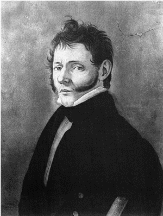
Today was Mardi Gras in 1875, and Governor Henry C. Warmoth (pictured) signed the Mardi Gras Act, making Fat Tuesday an official state holiday. But Carnival was slow to come to Baton Rouge. The first parade in the city was sponsored by two African American clubs, the Purple Circle Social Club and the “Esso Boosters.” It took place in 1941, and the King and his parade followers rolled down South Blvd., on to East Blvd., North Blvd. and ending on Government Street where the revelers attended a ball at the Club’s headquarters. An estimated 20,000 people showed up to watch the festivities.

February 24, 1873
Lincoln Parish was created by the legislature today in 1873, with Vienna as its parish seat. With the news that the Vicksburg, Shreveport & Pacific Railroad would be built in the vicinity, prominent local landowner and former sheriff Robert Edwin Russ was persuaded to donate six hundred acres of his land for a town to be built around a new depot. “Russ Town” opened in 1883, with lots selling for $375 each. So many people flocked to the new town that a year later, in 1884, the parish seat was moved to the town that was now coming to be known as “Ruston”.

February 25, 1836
Today in 1836, Governor S. B. White signed an Act of the Legislature to direct that the “Civil Engineer shall draw a plan and estimate of an Armory, to be built on a lot of ground belonging to the City of New Orleans on the site of the old prison, near the principals and that said building shall be at least two stories high and so constructed as to contain twenty pieces of artillery, and ten thousand stands of arms.” The Arsenal designed by noted architects James and Charles Dakin, and completed in the early 1840’s. It’s still there at 615 St. Peter Street. Thousands of people walk past it every day, having no idea what it is. The Armory became part of the Louisiana State Museum in 1914 and now can be entered through the neighboring Cabildo.

February 25, 1807
This week in 1807, the territorial legislature probably thought it knew what it was doing when it enacted legislation regulating marriages in the territory. The legislation largely reflected the tenets of civil law, rather than English common law. Section 60 of the lengthy act provided that “the husband and wife owe to each other mutually, fidelity, support and assistance. Section 61 provided that the wife was “bound to live with her husband and to follow him wherever he chooses to reside; the husband is
obliged to receive her and furnish her with whatever is required for the wants of life, in proportion to his means and condition.”

February 26, 1928
Why, surely you didn’t think that we’d let Fats Domino’s birthday go by without a shout-out. Antoine Domino, Jr. was born and raised in New Orleans, Louisiana, the youngest of eight children. The Domino family was of French Creole background and had recently moved to the city from Vacherie. Antoine learned to play the piano in about 1938 from his brother-in-law, Harrison Verrett, and by age 14, he was performing in New Orleans bars. In 1947, Billy Diamond, a New Orleans bandleader, heard Antoine perform at a backyard barbecue and asked him to join his band, the Solid Senders, at the Hideaway Club in New Orleans, where he would earn $3 a week playing the piano. Diamond nicknamed him “Fats”. By the time he retired from performing in 1995, he’d had 37 Top 40 singles, and Rolling Stone had named one of the Top 25 artists of all time.

February 26, 1903
After serving as president of what would become Iowa State University until 1881, Seaman A. Knapp moved to Louisiana in 1886 and founded the town of Vinton in Calcasieu Parish, naming after his old hometown of Vinton, Iowa. Knapp’s passion and mission were agricultural reform. By 1902, he was employed by the government to promote good agricultural practices in the South. He was convinced that demonstrations carried out by farmers themselves were the most effective way to disseminate good farming methods. In 1903, he led an agricultural demonstration at
the Walter G. Porter farm near Terrell, Texas, that eventually led to legislation that formalized Cooperative Extension work.

February 27, 1859
Today in 1859, the Steamboat Princess, sister boat to the Natchez and one of the great floating palaces of its day, blew up moments after pulling away from dock at Baton Rouge. A large crowd that had gathered on the levee to watch the boat’s departure witnessed the explosion in horror. At least seventy of the Princess’s 250 passengers, including several prominent Baton Rouge attorneys on their way to a meeting in New Orleans and others headed to the Crescent City to celebrate Mardi Gras, were blown to bits. Passengers with third degree burns who could get to shore were treated at Cottage Plantation. Slaves wrapped the injured in sheets and spread flour over them, which was the conventional treatment for burns at the time.

February 27, 2005
Madea made her American film debut this weekend in 2005, when Tyler Perry’s Diary of a Mad Black Woman opened in theaters across America. In 1969, Tyler Perry was born in New Orleans as Emmitt Perry, Jr. He once said his father’s “answer to everything was to beat it out of you.” In contrast, his mother took him to church each week, where he sensed a certain refuge and contentment. At age 16, he had his first name legally changed from Emmitt to Tyler to distance himself from his father. While Perry did not complete high school, he earned a GED. Around 1990, Perry moved to Atlanta.

February 28, 2026
In celebration of National Invasive Species Week (yes, it’s a thing), here are the top five most destructive invasive species in Louisiana in 2026. From left to right, they are: 1) Nutria, brought to Louisiana in the 1930’s to bolster the state’s fur industry; 2) Feral Pigs, which came to Louisiana and the New World with European settlers; 3) Chinese Tallow Trees, that were brought to America by Benjamin Franklin as an ornamental tree in 1772; 4) Giant Salvinia, first discovered in Louisiana at Toledo Bend in 1998. It came from South America, probably some other genius’s idea of an ornamental plant; and 5) Asian Carps, brought to Louisiana in the 1970’s to improve water quality and production in culture ponds. From there they escaped into natural waterways.

February 28, 1932
Radio station KEEL in Shreveport went on the air today in 1932 as Louisiana’s second commercial radio station. While the station has experimented with a number of formats over the decades, none were so beloved as the rock and roll format of the 1950’s and 60’s. In the days before the internet, KEEL’s 50,000-watt station cast a “clear channel” signal across the middle of America, bringing new artists and songs to teenagers and others in thirty states. Managed by Marie Gifford White (pictured), the first woman to manage a local radio station, performances by on-air personalities in the Ark-La-Tex generated big audiences for national and local performers in the 1960s.

February 29, 1976
Monroe’s Mohawk Tavern opened its doors on Louisville Avenue in 1952, and it finally got around to filing for a business license this week in 1976. Tom and Alline Fontana opened what is now believed to be the oldest restaurant in North Louisiana, serving raw oysters and a few other basic seafood dishes to the people of Monroe. In the 1960’s, the menu was expanded to include a wider range of seafood, but the flavor of the restaurant remained the same. Today, stepping into the Mohawk is like stepping into another era. Vintage photos from the early years still hang on the walls, and the restaurant is being run by the second and third generations of the family.