
November 16, 1735
Today in 1735, Jean Louis, a French sailor and boat builder, died in New Orleans and left his life savings of $1,600 to help establish a hospital for the poor of the city. The Charity Hospital currently located on Tulane Avenue is actually the sixth in a series of buildings intended to bring Jean Louis’s dream to life. The first Charity Hospital was built in the French Quarter and opened on May 10, 1736. Fires, hurricanes and overcrowding had consumed the first five hospitals before the Charity Hospital facility still standing on Tulane Avenue opened its doors in 1939 to serve the people of Louisiana until Hurricane Katrina put it out of commission in 2005.

November 16, 2021
Louisiana College in Pineville formally announced its new name Louisiana Christian University on November 16, 2021, during a meeting of the Louisiana Baptist Convention, according to a Wednesday news release,[15] although in November 2022 it was brought to the attention of the Louisiana Baptist Convention that the school had failed to change its name with the state of Louisiana. A motion was brought before the convention to refer to LC by its legal name (Louisiana College) until such a time as the school’s legal name had changed, but the motion was denied.

November 17, 1906
The first Louisiana State Fair opened in Shreveport today in 1906. Each year, Louisiana’s official state fair offers the largest livestock shows and carnival in the state, a large midway of rides, free daily circus shows, live entertainment, LRCA Rodeo Finals, exhibits and competitions. The Shreveport Fairgrounds are also home to the Independence Bowl Stadium, the State Exhibit Museum in Shreveport completed in 1939, and the Hirsch Memorial Coliseum, a 4,000-seat multi-purpose arena completed in 1954 and named for William Rex Hirsch, a former fair president. Hirsch Memorial Coliseum is where the words “Elvis has left the building!” were first uttered in 1957.

November 17, 1974
The national Strategic Petroleum Reserve (SPR) was created today in 1974. Following the energy crisis of 1973, the United States became a signatory to the Agreement on an International Energy Program and a founding member of the International Energy Agency that the IEP established. One of the key commitments made by the treaty’s signatories is to maintain oil stocks of no less than 90 days of net imports. Each of the four operational SPR site is located in a salt cavern as it is estimated to be ten times more cost efficient to store the petroleum below rather than above ground. The Bryan Mound SPR site near Freeport, Texas, was the first to open. In 1977, the government acquired a site near Hackberry that opened in 1988. SPR now operates a second Louisiana site at Bayou Choctaw in Iberville Parish. A third Louisiana site at Weeks Island in Iberia Parish was closed in 1999 as it was determined to be geologically unstable.

November 18, 2024
When Bob Love of Bastrop, Southern University and the Chicago Bulls passed away today in 2024, he left a legacy that was so much richer than basketball. Although he had appeared in NBA All-Star Games and had earned All-NBA Second Team honors with the Bulls, Love suffered a back injury in 1976 and traded to the Seattle Supersonics before being cut the following season. Then his life got interesting. He tried for seven years to find steady employment but his stutter made it impossible. In 1984, he was hired as a dishwasher at Nordstrom’s for $4.45 an hour. At the age of 45, in 1988, his life changed after meeting a speech therapist who helped him cure his chronic stutter. In 1992, he returned to work with the Bulls as the Director of Community Affairs. Bob Love, the man who once shied away from speaking in public, began giving motivational speeches to thousands of teens each year. His jersey was retired on January 14, 1994, but he was the proud recipient of the Individual Achievement Award from the National Council for Communicative Disorders and the Oscar Robertson Leadership Award, the NBA’s highest award.

November 18, 1943
Today in 1943, R. A. Fisher of Baton Rouge decided he’d had enough of waitresses and decided to do something about it. Fisher considered the term “waitress” to be demeaning to “the young ladies” who attend diners in restaurants and offered dinner and a $25 war bond to anyone who could come up with a better name. Considering that the winning entry was “dineade”, one wonders how many entries there could have been. But Fisher was as good as his word and entertained the winner at a
lovely dinner at the Patio Restaurant of the Istrouma Hotel. Miss Jewel Smith was the “dineade” who attended the dinner.

November 19, 1963
I’m Leavin’ It All Up to You, by Dale and Grace reached Number 1 on the Billboard weekly survey of pop music today in 1963. Grace Broussard was born in Prairieville in 1939, the sister of renowned singer Van Broussard. Robert Dale Houston, younger than Grace by a year, had been born in Mississippi and was a successful songwriter of tunes like That’s What I Like About You and Lonely Man. I’m Leavin’ It All Up to You had been written and recorded in 1957 by Don and Dewey. Dale and Grace would go on to another Top 10 hit in 1964, Stop and Think It Over, before breaking up in 1965.

November 19, 1799
They called her Countess Leon. Elisa Heuser Leon was born today in 1799 in Frankfurt, Germany, married a Christian mystic known as Count Leon and came to American in 1831. After leaving a Utopian colony in Pennsylvania, they left came to Louisiana and established their “New Jerusalem” at Grand Ecore north of Natchitoches. When the Count and several other relatives died of cholera, the Countess moved to the Germantown colony near Minden which flourished until it disbanded in 1871. The Germantown Colony (pictured) was the most successful and lasted the longest of the three Utopian colonies in North Louisiana, peaking at fifty to sixty followers but usually with fewer than forty.

November 20, 1946
Alfred “Fred” Tate purchased the bar that now bears his name in Mamou today in 1946. Some say that Louisiana’s “French Renaissance” after World War II began at Fred’s. In 1950, local men gathered at the bar to plan the first Courir de Mardi Gras in Southwest Louisiana. In June 1962, Revon Reed began his popular French language radio program on KEUN-AM in Eunice and later moved it to Ville Platte station KVPI. Reed was a high school teacher and started his program in Eunice. To
supplement his teacher salary, he asked Tate if he could do a Saturday jam session at the lounge.

November 20, 2008
“It was just right there!” Today in 2008, Lake Peigneur in Iberia Parish covered 1,300 acres of land and was popular for recreation and fishing until today in 1980. The drill assembly of a Texaco contracted oil rig pierced an inactive third level of the Diamond Crystal Salt Company salt mine. The hole produced a vortex that drained the lake into the mine, filling the enormous caverns that had been left by the removal of salt. Three dogs–but mercifully, no people–perished as the resultant sinkhole swallowed the drilling platform, eleven barges holding supplies for the drilling operation, a tugboat, many trees, and 65 acres of the surrounding terrain.

November 21, 2002
Louisiana’s first nutria hunting season began this week in 2002. In the 1930’s, the South American rodents were imported to Louisiana to augment the state’s fur-producing capacity. It probably seemed like a good idea at the time, but over the years, the varmints escaped or were set free from whatever was restraining them from decimating the state’s rice and sugar cane fields. By 1963, Louisianians had started fighting back, even publishing a cookbook (pictured) on how to cook nutria. Unfortunately, the prospect of Nutria Chow Mein was not sufficient to stem the tide. in 2002,the legislature stepped in and created the Coastwide Nutria Control Program, putting a six dollar bounty on each of tail turned in. A five-month annual harvesting season to commence the following November 1st was established.

November 21. 1987
Cuban inmates at the Oakdale Federal Prison in Allen Parish rioted today in 1987. Seven years after 125,000 Cubans had fled to America in the Mariel boat lift from Cuba in 1980, hundreds of the refugees with criminal records were still being detained at the Oakdale facility. Many of them rioted after learning that they might be sent back to their homeland under the new immigration agreement. The riot resulted in the death of one inmate, 120 hostages being taken and millions of dollars of damage inflicted on the facility. Rioters were thwarted by a quick-witted immigration officer who lobbed gas grenades into the compound.

November 22, 1963
On the day that President John Kennedy was being assassinated in Dallas in 1963, Walt Disney was in New Orleans, contemplating a “Louisiana Purchase” of his own. He was touring the city and meeting with city officials with an eye toward establishing a theme park in the Southeast that would be called Walt Disney World. New Orleans East along I-10 between the high-rise bridges and Lake Pontchartrain had been targeted for the project, and Disney had reportedly made a small land purchase. Uncle Walt loved New Orleans, and it was an inspiration for films and theme parks, but Walt Disney World in Louisiana wasn’t going to happen. “Florida gave Disney everything they wanted. Louisiana wanted everything from him,” said one official.

November 22, 1887
Following a three-week strike by mostly African American sugar cane workers around Thibodaux, policemen and white vigilantes attacked black workers and their families today in 1887, killing at least thirty-five and wounding as many as three hundred. It would be called the Thibodaux Massacre, and it would be one of the most violent labor disputes in U.S. history. The strike was the largest in the industry and the first conducted by a formal labor organization, the Knights of Labor. After the massacre, labor organizing among sugar workers was suspended, and plantation workers returned to work under the owners’ terms.

Thanksgiving Day, November 23, 1989
Lea Johnson, founder of Lea’s Lunchroom in LeCompte, appeared on The Tonight Show with Johnny Carson tonight in 1989. In 1928, Johnson had tired of the long, hot hours of automobile repair work and decided to do something different. Acting on a hunch, Johnson traded one car for two countertops, five stools, one coal-oil stove and a coffee pot. Not long after, he would hire Miss Georgie, who later became his wife, to manage the café. She would bring the secret to Lea’s eight delicious pies from her family. Since the 1960s, Lea’s estimates that it sells around 65,000 pies a year, with Thanksgiving being their busiest season.

November 23, 1759
Felipe Enrique Neri, self-styled Baron de Bastrop, was born today in Paramaribo, Dutch Guiana. His family moved back to their native Holland at an early age, where he began a career as perhaps a less-than-honest businessman and tax collector. By 1793, he’d been accused of embezzlement of tax funds and fled the country rechristening himself the Baron de Bastrop. By April 1795 he had arrived in Spanish Louisiana, where he represented himself as a Dutch nobleman. During the next decade he received permission to establish a colony at the site of the town that would eventually bear his name when it was incorporated in 1852. After Louisiana was sold to the United States in 1803, Bastrop moved to Spanish Texas and became a noted figure in the movement for Texas independence.

Thanksgiving Day, November 24, 1989
A culinary sensation was born on Thanksgiving Day this week in 1989 when a local chef in Dallas delivered a turducken to sportscaster John Madden at an NFL football game at Texas Stadium. Already stuffed viewers across the country watched in amazement as the hefty former coach sampled the combination of turkey, duck and chicken. The Franken-meat had been popularized by celebrity chef Paul Prudhomme,
and most agree that it was created at Hebert’s Specialty Meats in Maurice. “Junior” and Sammy Hebert claimed they created it in 1985 “when a local man brought his own birds to their shop and asked the brothers to create the medley.”

November 24, 2007
It was the “Thanksgiving With No Cornbread Dressing” at Angola Penitentiary this week in 2007. Food at the prison (above) was forgettable most of the year, but at the holidays, an effort was made to provide a special treat. At their Thanksgiving dinner in 2006, inmates had been served cornbread dressing with chopped chicken livers and gizzards that had been undercooked. As a result, a majority of Angola’s population suffered from food poisoning, making them eligible for the a pill, some Pepto-Bismol, and the standard payout of $75 for food poisoning cases at the prison. After a miserable holiday season, Warden Burl Cain banned cornbread dressing from future holiday menus. When Thanksgiving rolled around in 2007, the dressing had been replaced with dirty race and corn. In the future, food preparation practices would improve and be monitored more closely by several federal and state agencies, but for many inmates, nothing would replace the dish that had been the highlight of earlier holiday feasts.

November 25, 1986
A star was born this week in 1986 when Ellen Degeneres made her first appearance on The Tonight Show Starring Johnny Carson. DeGeneres was born in Metairie and raised as a Christian Scientist until age 13. In 1973, Ellen’s mother remarried and moved with her husband and Ellen to Atlanta, Texas. Ellen attended the University of New Orleans for one semester before dropping out to work as a waitress at T.G.I. Friday’s, a house painter, a hostess, and a bartender. By 1981, she was the emcee at Clyde’s Comedy Club in New Orleans. When she began touring as a stand-up comedian, the Showtime Network would name her America’s Funniest Person.

November 25, 2019
This week in 2019, the Isle de Jean Charles band of Biloxi-Chitimacha-Choctaw Tribe voted to become the world’s first offically-recognized climate refugees. The erosion of the marshes around their original home in Terrebonne Parish had accelerated after Hurricane Isaac in 2012. By 2019, more than 95 percent of the original Isle de Jean Charles community had vanished. A $48.3 million grant from the federal government provided for the construction of 34 new homes at the “New Isle” near Gray, approximately forty miles from the original settlement. The first residents of the New Isle, who prefer to be thought of as “climate pioneers” instead of refugees, began moving in August 2022.

November 26, 2005
Today in 2005, the Bayou Classic football game between the Grambling State University Tigers and the Southern University Jaguars was played outside of the State of Louisiana for the first and only time. The series had begun in 1932, but prior to 1974, it was a big in-state rivalry between the two schools, but not the media spectacle it would become. After it was re-branded as the Bayou Classic and moved to New Orleans, a trophy was added and numerous events were also scheduled to be held throughout the week leading up to the game itself. After Hurricane Katrina in 2005, organizers moved the game to Houston for one year.
November 26, 1974
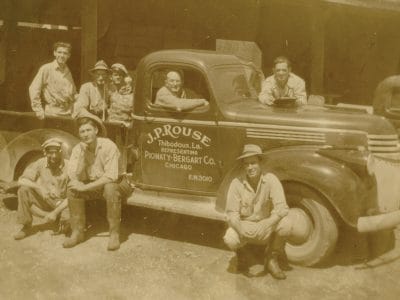
Happy Thanksgiving! What better time to talk about groceries! Rouse’s Supermarket, Inc. was established today in 1974. J.P. Rouse had opened the City Produce Company in Thibodaux in 1923. In the beginning, the company packed and shipped fresh Louisiana produce to supermarkets all over the country . In 1960, J.P.’s son Anthony and his cousin Ciro DiMarco opened their first grocery store in Houma, and from that point, there would be no looking back. Today, Rouses has more than 7000 employees at more than 60 store across the Southeast, generating more than $1.5 billion in sales per year. In 1924, Rouses Markets was named a Top Independent Grocers in the country.

November 27, 1924
Thanksgiving was celebrated today in 1924. In New York, the first Macy’s Thanksgiving Day Parade was making its way down Central Park West, and here in Baton Rouge, new and interesting things were in the air as well. First was the sound of the LSU Memorial Tower chimes, which were sounded for the first time at noon. Later that afternoon, LSU played its first game at Tiger Stadium. It was a 13-0 loss to Tulane, but brighter days lay ahead. Ten days earlier, LSU had played its last game at State Field on the university’s old downtown campus, defeating the Louisiana Normal Demons (now Northwestern State, but still the greatest name ever), 40-0.

November 27, 1986
On Thanksgiving Day this week in 1986, the Eiffel Tower opened after renovations–and a trip across the Atlantic to New Orleans. During renovations of the landmark in the early 1980s, the restaurant at the tower’s second level was determined to be weighing down the structure and taken apart, piece by piece. John Onorio and French Chef Daniel Bonnot, paid $1.5 million to ship the pieces to New Orleans to be rebuilt on St. Charles Avenue. While Bonnot cooked well enough to match the
restaurant’s former glory, the Restaurant de La Tour Eiffel would be short-lived. In 1989, the restaurant would close and be converted to an event venue.

November 28, 2008
Today in 2008, President George W. Bush signed into law legislation to designate the Friday after Thanksgiving as Native American Heritage Day to pay tribute to Native Americans for their many contributions to the United States. The oldest Native American settlement identified in Louisiana to date are the mounds at the Watson Brake site on the Ouachita River near Monroe. It is estimated to have been built in the Archaic period around 3400 BCE and abandoned around 2200 BCE. It is the oldest known mound complex in North America and one of the earliest dated complex constructions in the Americas.
November 28, 1927
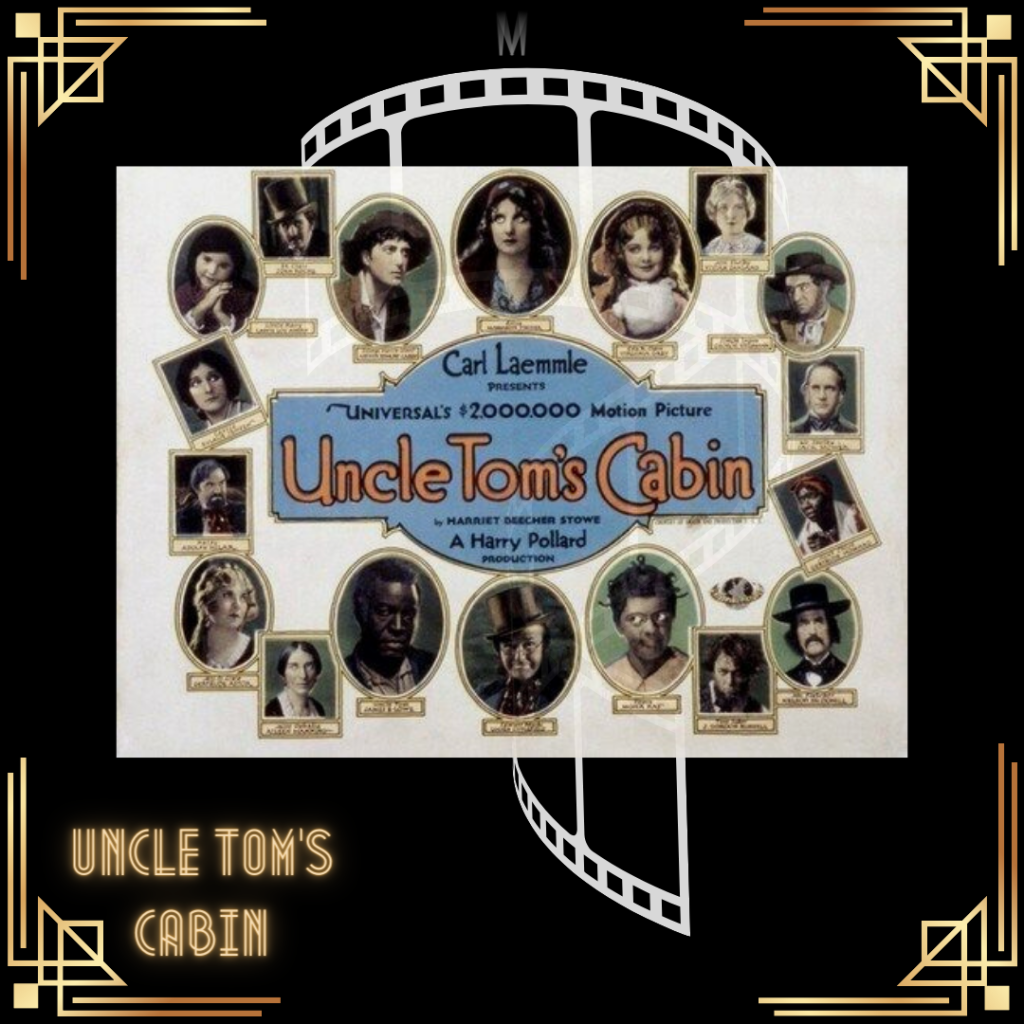
The silent movie version of Uncle Tom’s Cabin, directed by Harry A. Pollard and starring Margarita Fischer as Eliza and James B. Lowe as Uncle Tom was released in November 1927. As this was the dawn of the sound era, a sound version of the film premiered in September 1928. It was noteworthy in that it was one of the first films to feature an African-American rather than a white actor portraying an African-American character. At 127 minutes in length, it It was the first “big” Hollywood movie to be filmed partially in Baton Rouge, where more than 200 local citizens had been used as extras. The movie’s racial sensibilities might confound modern viewers, but it was representative of its era and was considered to be a classic. It would be a while before the film screened in a Baton Rouge theater as it was banned in most of the South, but it definitely created an appetite for movie making in the city.
November 29, 1972
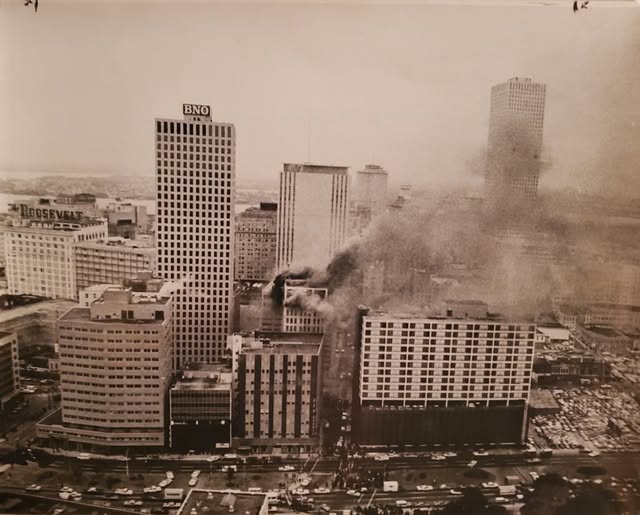
Tragedy struck in downtown New Orleans today in 1972 as six men and women were killed when a fire engulfed the top floors of the Rault Center, a 17-story high-rise office and apartment building. Eyewitnesses and news reporters watched in horror as five women – a salon owner, an employee, and three customers — screamed for help from the 15th-floor window of the Lamplighter Beauty Salon. Firefighters were on the scene but were unable to help. Their ladders were too short and water was unable to shoot that high. The women, desperate for escape, jumped eight stories to the roof of a neighboring building, which housed the Travelers Insurance Companies. Three of the women — Jacquelyn Ann McConnell Maillho, Norris Farley, and Janice McBeth — died instantly. A fourth woman, Wilma Williams, died later in the hospital. Investigators believe the fire could have resulted from arson, although the actual cause remains unknown.

November 29, 1988
George Gauthier purchased Stawn’s Eat Shop this week in 1988. The iconic eatery had opened across from the Centenary College campus in 1944. Gus Alexander purchased the restaurant from its original owner in 1958, and promptly hired Lula McCoy “The Fried Chicken Maker”, Ella Hamilton “The Pie Lady”, and Gladys Duncan “The Great Waitress”. Over the years, Strawn’s would become a Shreveport tradition. Gauthier would deny that he won he restaurant in a poker game, and he and his family would build on the restaurant’s tradition, expanding seating from 50 people to 150 people, and opening Strawn’s Too on East 70th Street, and Strawn’s Also on Airline Highway in Bossier City.

November 30, 66 Million Years Ago
What did Louisiana’s dinosaurs look like? The smart-aleck anwer to the question is, of course, “Ever see an alligator or a pelican?” but when the age of the dinosaurs officially ended 66 million years ago, some fairly impressive critters had been roaming the state–they just didn’t live on the land. At the time, what is now Louisiana was covered by a shallow sea, and what what dinosaurs there might have been were marine reptiles like the mosasaurs – massive marine reptiles that could reach lengths of nearly fifty feet. With powerful jaws and serpentine bodies, these “sea lizards” (pictured) ruled the marine ecosystem. To date, no dinosaur bones or fossils have been discovered in Louisiana.

November 30, 1894
Today in 1894, the first residents of the Louisiana Leper Home, which would later become the National Hanson’s Disease Center (and now the Gillis W. Long Center) in Carville, moved to the Iberville Parish facility. In 1892, the Louisiana legislature established the Board of Control to create the Louisiana Leper Home. The Board rented the abandoned Indian Camp Plantation on the Mississippi River, and Dr. Isadore Dyer, a dermatologist and leprologist from Tulane University Medical School, helped to establish the first patients who lived in the plantation’s slave quarters and fended for themselves. The first seven patients arrived from New Orleans by coal barge, as a diagnosis of leprosy made use of public transportation illegal. Today the National Hanson’s Disease Museum stands at the site, along with Louisiana National Guard’s Youth ChallenGe Program.