
December 16, 1884
World’s Industrial and Cotton Centennial Exposition, also called the World Cotton Centennial, opened to the public in New Orleans today in 1884. At a time when nearly one-third of all cotton produced in the United States was handled in New Orleans and the city was home to the Cotton Exchange, the idea for the fair was first advanced by the Cotton Planters Association. Congress lent $1 million to the fair’s directors and gave $300,000 for the construction of a large US Government & State Exhibits Hall that would enclose thirty-three acres and was the largest roofed structure constructed up to that time.

December 16, 1814
Americans learned a new legal term today in 1814. Martial Law. Andrew Jackson had arrived in New Orleans on December 1, 1814, to prepare for a British invasion that everyone knew was on the way. Jackson had received pleas from Governor William C.C. Claiborne and others within the city to take military control of the unsettled and significantly foreign population. Jackson declared martial law on the 16th, the first time in the history of the republic that it had happened. All who entered or exited the city were required to report to the adjutant – general’ s office. All vessels, boats or other crafts desiring to leave the city required a passport either from the General, his staff, or Commodore Daniel T. Patterson. All street lamps were ordered extinguished at nine p.m. and anyone found after that hour without a pass was arrested and held as a spy. New Orleans was offi cially an armed camp and General Jackson the only authority until the order was rescinded after the battle.
December 17, 1935
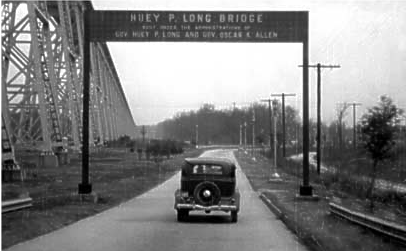
The Huey P. Long Bridge in Jefferson Parish, the first bridge over the Lower Mississippi River, was dedicated this week in 1935. Before the ceremonies, a special sixteen-car train stuffed with dignitaries left Union Station, crossed the bridge to Avondale and returned. Thousands packed the traffic circle on the New Orleans side of the bridge for the ceremony where Governor O. K. Allen spoke and Mrs. Rose Long cut the ribbon for the span named for her late husband. C Later in the afternoon, a second train left Union Station for those who wanted to cross the bridge on the first day. Construction work had formally started on December 31, 1932.
December 17, 1932
You can’t put a date on beignets. Some say the recipe goes back to the days of the Roman Empire. It’s fairly safe to say that the recipe made it’s way to France (where the word beignet is French for “fritter”, and from there it made its way to the Louisiana colony. According to Gambino’s Bakery in New Orleans, the original recipe for the beignets at Cafe du Monde was brought to Louisiana colony by the Ursuline nuns. Cafe deMonde itself opened in the French Market in April of 1862, but no one can say exactly when. But what we do know is that Cafe du Monde received its business trademark this week in 1932. For over the 150 years, the venerable beignet stand has been delighting our tastebuds and ruining our black garments. Today there are ten Cafe du Monde locations in the New Orleans area.
December 18, 1948
WDSU in New Orleans, Louisiana’s first television station, went on the air today in 1948. It was also the first on the Gulf Coast, the second in the Deep South after WSB-TV in Atlanta, and the 49th in the nation. The station was founded by New Orleans businessman Edgar B. Stern, Jr., who also owned WDSU radio station and others in the city. The radio station was originally located at the DeSoto Hotel, now the LePavillon Hotel; the “D” in the name stood for the DeSoto, the “S” for the New Orleans States newspaper, and the “U” for Joseph Uhalt, who founded the radio station as WCBE in 1923.

December 18, 2026
Ever got a basket of satsumas and other Plaquemines Parish citrus for Christmas> Jesuits brought citrus trees to the area about three hundred years ago, and over the centuries, citrus farming became a major cash crop Plaquemines Parish, sometimes called the Louisiana Orange Belt. Production reached its zenith in the 1940s with a staggering 410,000 boxes of oranges. However, current estimates are only about 15,000 box per year, due to hurricanes, canker, and other greening diseases over the years. Satsumas, of course, are the most popular Louisiana oranges, and theycontinue to find their way to iconic roadside fruit stands like Becnel’s (photo) and local grocery stores across Louisiana and beyond.

December 19, 2026
As Christmas nears, your thoughts might turn to the legendary Bennie Grunch and the Bunch and their Christmas Album, The 12 Yats of Christmas. (Christmas in Chalmette is a particular favorite.) So what kind of name is Grunch? The Grunch is probably the least famous and least understood member of the Louisiana pantheon of Loup Garous, Rougarous, Pere Malfaits, and other monsters. The Grunch made its home along a remote stretch of shell road that came to be known as Grunch Road, a thoroughfare now lost to time. Most people think it was somewhere in Little Woods in eastern New Orleans, although there are those who think it was near English Turn on the West Bank. Early descriptions from the early 1800’s say it was a grotesque hybrid of man and beast, with the scaly, leathery body of a reptile, the horned head of a goat, and the glowing red eyes of a demon. He/she/it could open doors, use tools, and mimic human speech in order to lure its victims to their doom.
December 19, 1990
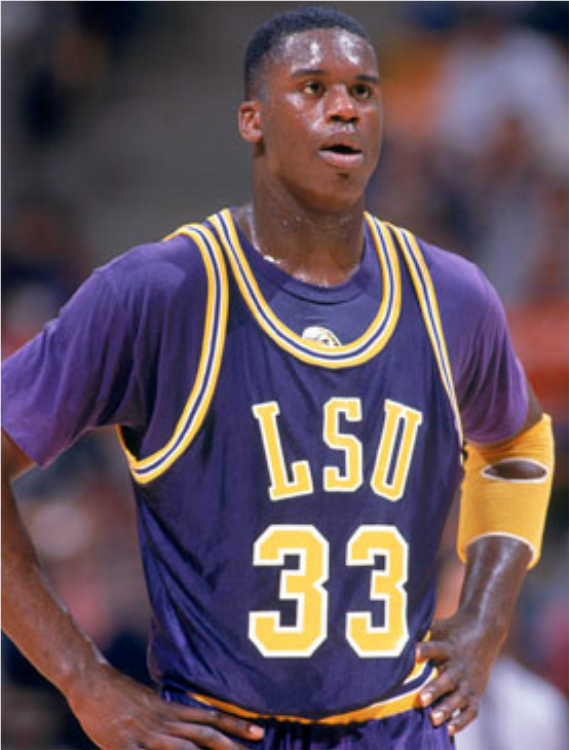
Shaquille O’Neal scored 49 points against Arkansas State in a game played this week at the Maravich Assembly Center, setting a new record for the building. O’Neal was born in Newark, New Jersey in 1972, and came to LSU, where he was a two-time All-American, two-time SEC Player of the Year, and received the Adolph Rupp Trophy as NCAA men’s basketball player of the year in 1991. He was also named college Player of the Year by AP and UPI. He left LSU early to pursue his NBA career but continued his education even after becoming a professional player. He was later inducted into the LSU Hall of Fame.
December 20, 2000
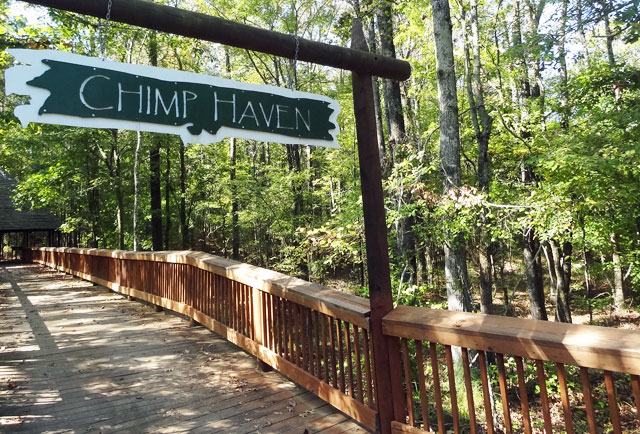
Today in Washington, Congress passed the Chimpanzee Health Improvement Maintenance and Protection Act, also known as the–wait for it–CHIMP Act to protect aging and sick chimpanzees that had been used in medical research . Over the next several years, many of those chimps would make their way to the National Chimpanzee Sanctuary, the world’s largest chimpanzee sanctuary, in Keithville, near Shreveport. Also known as Chimp Haven, the facility takes in former lab animals and aims to give them a normal, happy life in a protected environment. The facility is home to more than 300 chimpanzees, a few more than 60 years old.The sanctuary isn’t open for daily visits, but it does invite visitors twice a year for special events.

December 20, 1860
When word reached New Orleans that South Carolina had seceded from the Union today in 1860, it was assumed that Louisiana would soon follow suit (and Louisiana would indeed secede a month later on January 20, 1861.) To celebrate South Carolina’s action, officers at Camp Prospect, just outside the city limits in Jefferson Parish, authorized raising the “Pelican” flag (photo). The flag flew for one day only until it was ordered to be taken down. The original flag is now housed at the Louisiana State Museum in New Orleans, where it is being given a $4500 restoration.
December 20, 1803
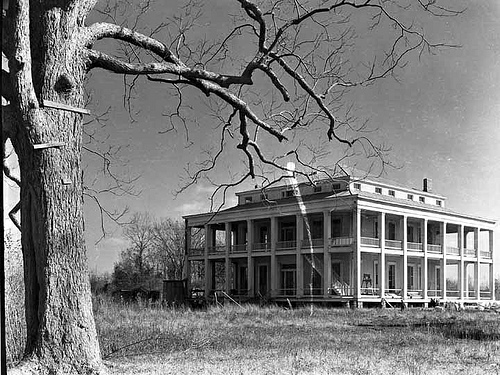
Joseph Deville de Goutin Bellechasse was commander of the militia at the transfer of the French colony of Louisiana to the United States today in 1803. Bellechasse had been born in New Orleans in 1761, and entered Spanish military service in 1779, when he fought along with Don Bernardo de Galvez at British posts at Fort Bute at Manchac and at Baton Rouge. In 1803, he retired from the military and engaged in business enterprises in New Orleans and on the German Coast before being returning to the military in 1803. He would later be elected president of the legislative council in 1810.

December 21, 1867
Sarah Breedlove, known as Madam C. J. Walker, was born this week near the village of Delta in 1867. One of six children, Breedlove’s parents and her older siblings had been enslaved on Robert W. Burney’s Madison Parish plantation, but Sarah was the first child in her family born into freedom. After moving first to Denver and then to Saint Louis, Walker made a fortune by developing and marketing a line of beauty and hair products for black women. She was said to be the first female self-made millionaire in America. She would be known for her philanthropy and political and social interests, as well as her entrepreneurial skills.

December 21, 2026
Dreaming of a White Christmas? When it comes to weather, it’s fairly safe to say that “nobody knows anything,” but it’s also true that the odds of a White Christmas are pretty slim. Of course, thee last recorded snowfall on Christmas Day varies from city to city. Shreveport received a trace in 2012, but prior to that the city had been snow-free since 1929. Baton Rouge and New Orleans received a dusting in 2017, and 1-3 inches in 2004. Before that, the last snowfall in New Orleans on Christmas Day had occurred in 1953 and before that in 1895. Lake Charles and Lafayette have never recorded snowfall on Christmas Day. So turn up the AC and keep dreaming!

December 22, 1896
Tonight in 1896, operagoers who’d flocked to the Grand Opera House in Shreveport (pictured) for a performance of Verdi’s Carmen received a bit a lagniappe. They were treated to a glimpse of the future, as a short film, the first motion picture ever shown in the city, was presented. As Shreveport historians have noted, the folks at the opera house that night might even have witnessed the beginning of the end of the opera house itself. Though it operated for some years more, it began to hemorrage audiences to vaudeville houses like the Majestic and eventually, to movie theaters like the Strand. The opera house was eventually demolished in 1927.
December 22, 1942
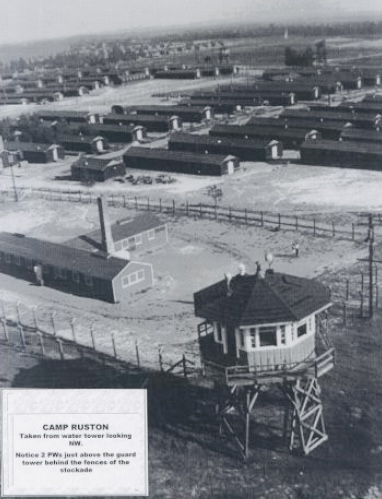
Camp Ruston in Lincoln Parish, one of four large internment facilities established in Louisiana to house the hundreds of thousands of captured Axis soldiers who were transported to the United States, was activated this week in 1942. After a survey of several candidate sites in north Louisiana, the War Department selected the Grambling location, in part, because of its proximity to the Vicksburg, Shreveport, and Pacific Railroad—a necessity for the efficient movement of men and materials. Officials bought 750 acres via eminent domain from the landowners for $24,200 and promised the return of the property after the war. Local contractor T.L. James & Company built the camp on a standardized plan that included rows of tar-paper-covered housing units for the prisoners, a housing and administrative complex for the American guards, three water wells, a water tower, kitchens, mess halls, latrines, a chapel, a laundry, and recreation areas. The POW officers’ compound was separated from that of the enlisted men. A tall wire fence punctuated by guard towers surrounded the entire camp at a cost of $2.5 million.

December 23, 1814
The Louisiana Militia had been established by the new state legislature in 1813, but today in 1814, the militia was mobilized for the first time in preparation for the Battle of New Orleans, less than one month later.On the evening of December 23, Andrew Jackson led 2,131 men, including the Third Regiment of the Louisiana Militia and Major D’Aquin’s Battalion of Free Men of Color in a brief three-pronged assault from the north on the unsuspecting British troops, who were resting in their camp near the site of the current battlefield. The raid was supported by cannon fire from two gunboats and USS Carolina, signaling the start of the attack. This was considered to be both the first major land action of the Battle of New Orleans and the birth of what would become the Louisiana National Guard.
December 23, Early 1900s
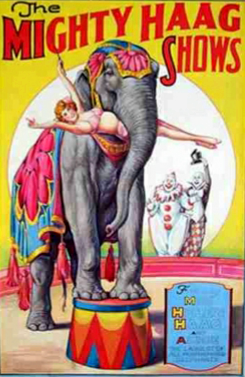
This week in the early 1900’s, the Mighty Haag Circus, a two-ring circus based in Shreveport would return to its hometown and enter winter quarters after a long year on the road. The circus had been famous for the one-legged clown Roy Fortune, a highwire walker, sword swallower Marguerite Davis as well as elephants, bears, ponies, camels, lions, tiger and blue-faced monkeys, hyena, ocelot and badger. . When the circus came to Shreveport for the winter, they got off the train at Texas Street and people lined up to see the two-mile parade of wagons to the Pine Wold House. The famous circus elephant Trilby is buried at Pine Wold.

December 24, 1700’s Christmas Eve
There’s no one who can say for sure how the bonfires along the Mississippi River levee around Gramercy got started, but they did, and Louisianians being who we are, made a party out of it. Were the original bonfires lit to guide worshippers to mass on Christmas Eve? Or to guide Papa Noel on his journey to visit the good little girls and boys of St. James Parish? It doesn’t matter. Starting weeks in advance, families and friends build 20-30 foot bonfires along the levee. Most of the log structures are
cone-shaped, some are impressive sculptures of paddlewheel steamships, pelicans, and one very impressive alligator (pictured). Joyeux Noel!

December 24, 1989
Today in 1989, an explosion at the Exxon Refinery in North Baton Rouge killed two men. Frigid eight-degree temperatures on Christmas Eve caused a pipe rupture, causing one man to be killed when the concussion and fireball crushed his truck, and another to die of smoke inhalation later. The blast at 1:30 on Sunday afternoon blew paint off of pipes a mile away. It was felt in Hammond, and the smoke cloud that was hundreds of feet high could be seen in LaPlace. Most of giant refinery had already been shut down due to cold weather, but several tanks, pipelines, buildings and other facilities were burned or destroyed.
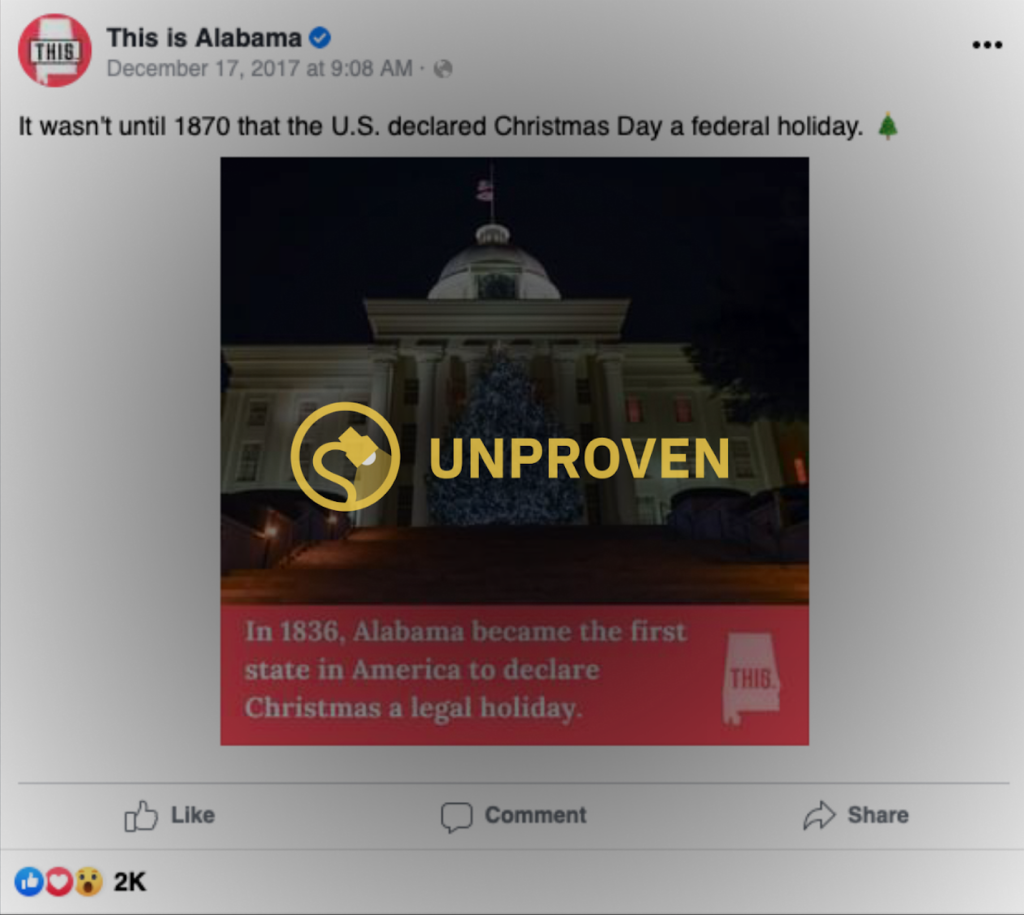
Christmas Day, December 25, 1838
So if you’re just looking for something else to argue about with somebody from Alabama, tell them that Louisiana, not the Yellow Hammer State, was the first state to officially recognize Christmas Day in 1838. Alabamans will claim that it was recognized there in 1836; however, according to Snopes.com, four different directors of the Alabama State Archives have said that they can find nothing to back up the claim, which first started making the rounds in 1954. Claims by Louisiana and Arkansas to be first in 1838 are better substantiated. But in the spirit of Christmas, we should all agree that wherever it came from, it was a pretty great idea.

Christmas, December 25, 1947
Are you one of thousands of lucky Louisianans who got a Grayson ham for Christmas? After leaving the Merchant Marines, Ollie O. Grayson opened the restaurant that bears his name in Clarence in Natchitoches Parish in 1959. Today, Gregory and Bryan Grayson are the third generation to run the restaurant where many of the staff members have been chopping wood for the pits or whipping up the potato salad and
homemade buns for two decades or more. The selection of meat is extensive, but Grayson’s is famous for its smoked hams. More than three thousand are sold each holiday season.

December 26, 1941
The Louisiana College Wildcat football team departed today four Mexico City to play in the Orchid Bowl against the National University of Mexico. The twenty-four members of the team and five coaches and managers would travel by automobile and stop along the way to practice in San Antonio and in Monterrey. The teams had met on six previous occasions, with the Americans winning all six contests. The Wildcats would prevail on January 1, 1942, as well, but the victory would be bittersweet. Two weeks later, Louisiana College Acting President H. M. Weathersby would announce that the college was dropping football for the duration of World War II.

December 26, 2026
Thinking about making a gumbo with your Christmas leftovers? Legend tells us that okra came from Africa, but nobody agrees on how that might have happened. Abelmoschus esculentus, is a member of the Malvaceae, or mallow family, kissing cousins with cotton, cocoa, durian, and hibiscus. When the pods get too big and fibrous, okra takes on the characteristics of its inedible relative balsa wood. Some scientists argue okra came out of the Ethiopian Highlands, then spread across the Arabian Peninsula and onward to the African subcontinent on two principal trade routes known as the Monsoon Exchange. According to researcher Shane Mitchell, “Okra does not appear on ship provision manifests, unlike horse beans, cassava, or yams, the most common rations fed to kidnapped Africans during voyages to the New World. And yet, here it is.”

December 27, 1957
Today in 1957, a week after Elvis Presley received his draft notice during the middle of filming King Creole in New Orleans, Presley received a special 60-day deferment to allow him to finish the film. King Creole, directed by Michael Curtiz (Casablanca) was based on the 1952 novel A Stone for Danny Fisher by Harold Robbins and also starred Carolyn Jones, Walter Matthau, Dolores Hart, Dean Jagger,and Vic Morrow. Elvis would later say that of all the characters he portrayed during his career that the role of Danny Fisher in King Creole was his favorite. During location filming in New Orleans, scenes were delayed several times by crowds of fans (photo).

December 27, 1741
Jean Étienne de Boré was born in Kaskaskia, Illinois Country, today in 1741. In 1795, he succeeded in making sugar granulate at his wife’s family property in New Orleans. De Boré was not the first to have accomplished the feat, but he was the first to do it in a manner judged to be economically successful. Sugar cane would become a profitable commodity crop and planters would began to cultivate it in quantity. His first crop consisted of some 100,000 pounds of sugar which were sold for 12.5 cents per pound, along with 50 cents per gallon for molasses, which netted him a profit of $12,000.

December 28, 1862
The Old State Capitol in Baton Rouge burned tonight in 1862. The Old State Capitol had been shelled by Union gunboats in May, 1862, but it was still usable as a camp for soldiers and sailors. Soldiers quartered in the old state capitol carelessly but unintentionally set the building on fire. As the ten-year-old structure burned, its flames lit up the waterfront. In the morning, the blackened walls of the proud structure were still standing, but the interior had been gutted. The dilapidated building (photographed here after the fire) would sit empty until 1879, when the legislature voted to return to Baton Rouge and appropriated funds to begin the process of restoration.

December 28, 1997
Tonight in 1997, the biggest crowd in Poulan Weedeater Independence Bowl history turned out at the Fairgrounds to watch LSU trounce Notre Dame, 27-9. The 22nd edition was the second time the teams had played each other that year, as the Irish had defeated the Tigers in Baton Rouge, 24-6, on November 15th. LSU’s Rondell Mealey and Arnold Mealey were named the outstanding players of the game. McNeese State defeated Tulsa in its first game in the first Independence Bowl in 1976, which was called the Bicentennial Bowl, before changing its name the following year. Over the years, LSU, Tulane, McNeese State and Louisiana Tech have played in the bowl.

December 29, 1914
They called it “The Magic City.” Incorporated in 1914, Bogalusa is one of the youngest towns in Louisiana. It was founded by Frank Henry Goodyear and Charles Waterhouse Goodyear, lumber barons of Buffalo, New York. In the early 1900s, the brothers bought hundreds of thousands of acres of virgin Longleaf pine forests in southeastern Louisiana and southwestern Mississippi to fashion railroad spurs for a world that was desperate for them. They chartered the Great Southern Lumber Company in 1908 and built the first sawmill in what became Bogalusa, a company town built to support the mill. The sawmill was the largest in the world at the time. The city, designed by architect Rathbone DeBuys of New Orleans and built from the ground up in less than a year, had several hotels, schools, a hospital, a YMCA and YWCA, churches of all faiths, and houses for the mill workers. The town was laid out with the “Mill Town” on the south side and “Commercial Town” on the north side, altogether there were four quadrants with racially segregated neighborhoods. It was called the “Magic City” in praise of its rapid construction.

December 29, 1989
Legendary New Orleans sportscaster Hap Glaudi died today in 1989. Glaudi attended Jesuit High School in New Orleans, where legend says he financed his high school education from his winnings at the horse track. Glaudi worked on the school newspaper at Jesuit and later parlayed those skills into a twenty-five career at the New Orleans Item. He would become WWL-TV’s lead sportscaster from 1964 until 1978, and later he would add radio to his broadcasting skills, working at WWL (AM) on the pre-game and post-game shows for the New Orleans Saints. Outspoken and passionate though he was about the Saints, Glaudi never took issue with even the most opinionated callers.

December 30, 2005
In December 2005, in the aftermath of Hurricane Katrina, Tulane University announced a university renewal plan that would merge its liberal arts and sciences colleges for women and men, forming Newcomb-Tulane College. Prior to this point, the diplomas of women students in arts and sciences were issued by Newcomb College of Tulane University; the diplomas of all undergraduates now read Newcomb-Tulane College of Tulane University. In 1886, Josephine Louise Newcomb had donated over $3 million to establish a college to honor her daughter, Sophie, who died of diphtheria. It was designed to provide higher education to young women, starting with 30 students in 1887 in a converted mansion on Camp and DeLord Streets. (The Class of 1895 is pictured here.) As the first coordinate college for women in the U.S., it was part of Tulane University but maintained its own faculty, administration, and campus until the reorganization announced in 2005.

December 30, 1950
New Orleans is first city in Louisiana to be named an All-American City today in 1950. It would win the honor again in 1996, and Shreveport would earn the designation in 1953, 1979, 1980 and 1999. Alexandria would be recognized in 1994. The All-America City Award is given by the National Civic League annually to ten communities in the United States. It recognizes those whose citizens work together to identify and tackle
community-wide challenges and achieve uncommon results. Winners can be neighborhoods, towns, villages, cities, counties, or regions. The All-America Award is the oldest community recognition program in the nation.

December 31, 1910
American aviatoer John Bevins Moisant (pictured here with his cat Mademoiselle), born in Illinois in 1868, died today in 1910 when he was ejected from his plane in a field west of New Orleans. At the time, he was competing for the 1910 Michelin Cup. He had been the first pilot to conduct passenger flights over a city (Paris), as well as across the English Channel from Paris to London. Moisant funded his aviation career with proceeds from business ventures in El Salvador, where he had led two failed revolutions and coup attempts against President Figueroa in 1907 and 1909.The site of his crash is the location of Louis Armstrong New Orleans International Airport, which was originally named Moisant Field in his memory.

December 31, 1999
Today in 1999, not all Louisianans were waiting around to see if the world was going to end at midnight. More than a few were doing all they could to help it along. At a “Mass of resurrection” with jazz gospel music was observed at the St. Augustine Catholic Church in New Orleans. Afterward, the past hundred years were “mourned” at a traditional jazz funeral that wound through the streets of Treme and paused at the gates of St. Louis #1 Cemetery on Basin Street. The somber farewell was followed by a joyous second-line with the Budweiser Clydesdales through the French Quarter.