April 16, 1958
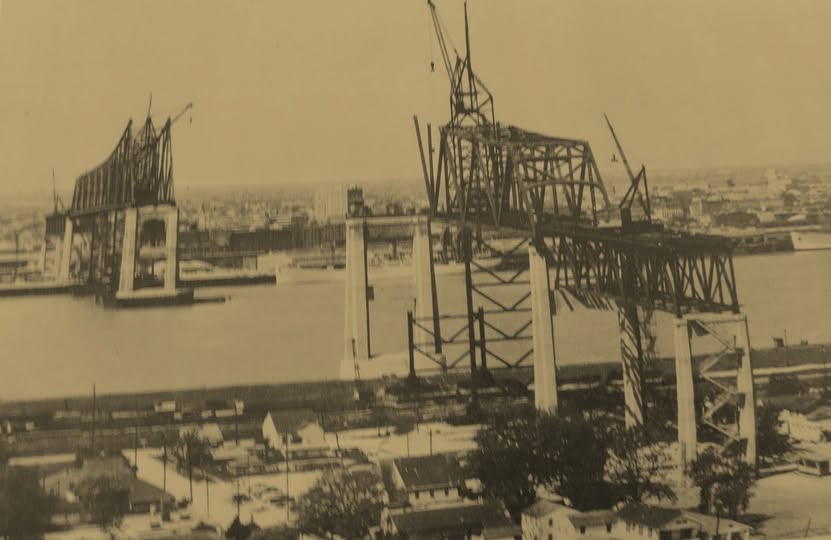
The Greater New Orleans (GNO) bridge across the Mississippi River was dedicated this week in 1958. It was and is the farthest downstream bridge on the Mississippi River and is also the widest and most heavily traveled bridge on the lower Mississippi. At its opening, the bridge was the longest cantilever bridge in the world, although in terms of main span length it was third, after the Forth Bridge and the Quebec Bridge. It carried two lanes of traffic in each direction and spurred growth on the West Bank. When it opened in 1958, bridge users paid a toll of 35 cents for cars and light trucks, and higher tolls for heavier vehicles. The toll was reduced to 30 cents in 1962 and eliminated in 1964, after John McKeithen had made it a campaign issue. The second (eastbound) bridge opened in September 1988.After the completion of the second span, a public contest was held in 1989 to rename the bridges, which was won by Jennifer Grodsky, of St. Clement of Rome School in Metairie.

April 16, 1868
The Battle Ground Baptist Church in Fazendeville was founded today in 1868. The battle ground in question is the Chalmette National Battlefield near New Orleans. In 1854, the land on which the village of Fazendeville (the road lined with homes in the photo) would be built was listed as part of the succession of Jean Pierre Fazende, a “free man of color.” At the end of the Civil War, Fazende’s son divided what the land into lots and sold them to recently freed slaves. This led to the establishment of Fazendeville and the church. The 1888 state census documented a total of seventeen families living there. In 1939, Congress enacted egislation authorizing the government to acquire the community and other land near the Chalmette National Battlefield. This marked the beginning of the end for Fazendeville, which finally came in 1964 when the St. Bernard Parish Government expropriated the rights to the land for expansion of the park around the battlefield site.
April 17, 1922
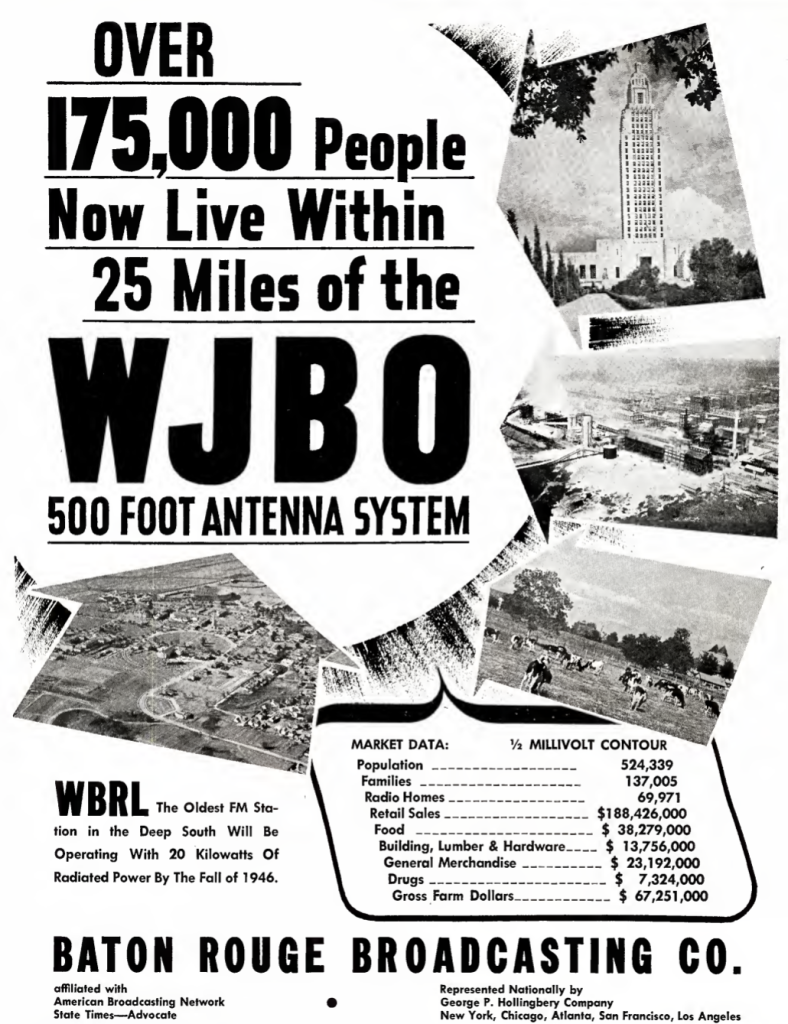
A license to operate radio station WAAB was issued by the Federal Communications Commission to the New Orleans Times-Picayune today in 1922. It is said to be the oldest four letter call-letter station. A few months later ownership was transferred to the station’s primary operator, Valdemar Jensen, who operated the station from his house’s basement. In early 1926, he changed the call letters were changed to WJBO, for the Jensen Broadcasting Organization. Jensen broadcast from the Roosevelt Hotel and Orpheum Theater. In 1932, he sold WJBO to the owners of The Advocate newspaper in Baton Rouge who moved the station to Baton Rouge in December 1934 as the capital’s first commercial radio station. In 1940, the company was awarded a license to operate an FM station, now WFMF, whose debut broadcast as “the first frequency modulation radio station in the Deep South” was on June 15, 1941.
April 17, 1837
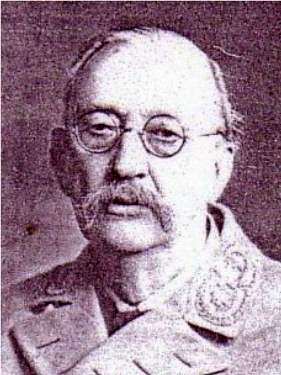
Dr. Tichenor was born in Ohio County, Kentucky, today in 1837. George H. Tichenor had served in the Confederate Army as an assistant surgeon. While at this post, he developed the original Dr. Tichenor’s antiseptic formula. In 1863, he was wounded in a battle near New Albany, Mississippi, and saved his leg using the formula. Tichenor’s reputation would later suffer from his intransigence in not allowing his methods to be used on Union soldiers. After the war, he was encouraged to manufacture and sell his amazing germ-killing formula. He practiced medicine in Baton Rouge from 1869-1887. He died in 1923 and is buried in Innis in Pointe Coupee Parish.

April 18, 1923
This week in 1923, voters in Caddo Parish approved a bond issue to build a concrete dam and water purification plant to supply the water needs of Shreveport and other municipalities in the area. The dam the newly created Cross Lake were officially declared open on January 30, 1926. Cross Lake now has 56.4 miles of shoreline with nearly 14 square miles of water surface. When it was first constructed, the lake had a capacity of 25 billion gallons of water. It is the primary source of fresh water for Shreveport, Caddo Parish, and Barksdale Air Force Base.
April 18, 1862
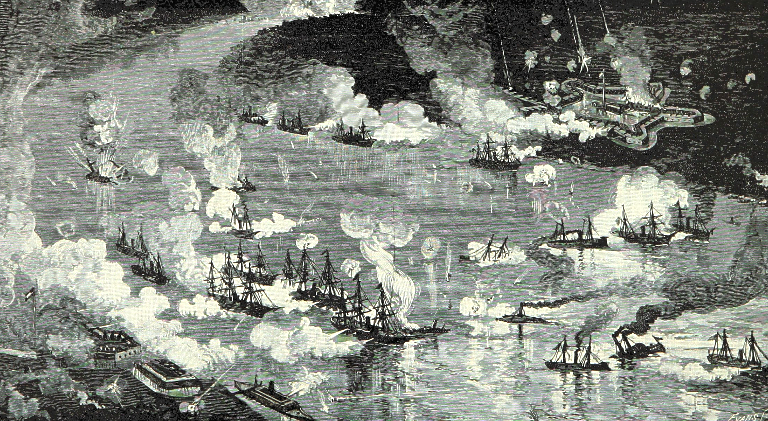
The first shots of the Civil War in Louisiana were fired today in 1862. After the outbreak of the war, the Confederates had hastily fortified Forts Jackson and St. Philip at the mouth of the Mississippi River. On April 18th, 1862, a Union fleet under the command of Admiral David Farragut would begin the shelling the forts and continue the bombardment for the next five days. On the 24th, Farragut and the fleet would sail past the forts. As Farragut had hoped, the aim of the Confederate gunners was poor, and his fleet suffered little damage. The fleet reached New Orleans the following day, and the forts surrendered on the 28th.
April 19, 1859
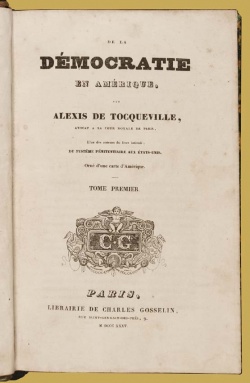
Author Alexis de Tocqueville died in Paris this week in 1859. Most famous for his impressions of the new American republic he’d visited in 1831 and 1832, he was particularly struck by what he’d seen of the French immigrants he’d met in Lower Canada and Louisiana. In short, he wasn’t optimistic about the future of French culture in the United States and Canada. Both Quebec and Louisiana preserved the language and civil code, but used English for commercial signs. “[It is an] American commercial and industrial world.” There is also a feeling of attachment to things considered French. This country, according to him, “[…] is essentially French in its ideas, customs, opinions, and ways. It is modelled ostensibly on France.” On the one hand, the land belongs to the French speaking population, but the upper management levels of business are in the hands of the Americans. Secondly, “the French in Louisiana are not enterprising in business. They don’t like to risk their property and are afraid of the dishonour of failure”. However, “the Americans (…) are consumed by the desire for riches.”

April 19, 1979
In 1825, the Louisiana Legislature chartered four public colleges. One of these was the College of Louisiana at Jackson. In 1839, the Methodist Conference of Mississippi had established a college in Clinton, Mississippi. In 1845, the College of Louisiana lost its funding from the legislature, so Centenary purchased the campus, moved to Jackson and took a new name, the Centenary College of Louisiana. The college would continue to struggle, and move to Shreveport in 1905. Centenary’s 1825 founding gives it the distinction of being the oldest liberal arts college west of the Alleghenies. The abandoned campus in Jackson was added to the National Register of Historic Places today in 1979.

April 20, 1877
Surely you didn’t think that Louisianians would allow themselves to be left out of something called “The Fraud of the Century.” Today in 1877, President Rutherford B. Hayes removed the last federal troops from the state after Reconstruction. The deal to send the troops home had been sealed the previous November when Democrat Samuel J. Tilden carried Louisiana and two other southern states in the Presidential election of 1876, but the Democratic members of the Electoral College from Louisiana, Florida, South Carolina, and Oregon switched their votes to the Republican Hayes in exchange for an agreement to remove the troops. The removal of the troops was touted as the official end of Reconstruction in Louisiana, but its effects would remain for decades to come.

April 20, 2010
Today in 2010, the Deepwater Horizon drilling rig exploded in the Macondo Prospect oil field about forty-five miles southeast of Plaquemines Parish. The explosion and subsequent fire resulted in the sinking of the Deepwater Horizon and the deaths of eleven workers. Seventeen others were also injured in the blowout that caused a massive offshore oil spill in the Gulf of Mexico. It was considered the largest accidental marine oil spill in the world, and the largest environmental disaster in U.S. history. By 2013, criminal and civil settlements and payments had cost the company $42.2 billion. In July 2015, BP was fined $18.7 billion, the largest corporate settlement in U. S. history.

April 21, 1925
You blew it. If you didn’t run down to the United Realty Company this week in 1925, you missed an opportunity to invest in “Harlem Drive — on the Lake — is what we believe to be the coming section of local residents. It will eventually be one of the most beautiful residential sections” boasted United Realty, Inc., over 90 years ago, in this ad in the Times-Picayune for lots selling for $135 and up. Harlem Drive would later be renamed Causeway Boulevard and, as we know, is a hub of commercial activity — especially near Lake Pontchartrain. Much of the land was swampy at best. In fact, neither Harlem Drive/Causeway Boulevard nor Hammond Highway existed at the time this ad published. “Just walking distance from West End Park,” was also a curious claim. It’s four-and-a-half miles away.

April 21, 1939
Sister Helen Prejean was born today in 1939 in Baton Rouge. She joined the Sisters of St. Joseph of Medaille (now the Congregation of St. Joseph) in 1957. She began her prison ministry in 1981, when she dedicated her life to the poor of New Orleans. While living in the St. Thomas housing project, she began correspondence with Patrick Sonnier, the convicted killer of two St. Tammany Parish teenagers, who had been sentenced to die in the electric chair at Angola State Prison. Sister Helen’s story and her relationship with Sonnier was dramatized in the 1995 film Dead Man Walking.

Earth Day, April 22, 1971
On Earth Day in 1971, the Keep America Beautiful organization launched its legendary “Crying Indian” campaign, featuring Kaplan native Iron Eyes Cody. “Iron Eyes” wasn’t “Indian” at all. He’d been born Espera Oscar de Corti to Sicilian parents in 1904. He had two brothers, Joseph and Frank, and a sister, Victoria.[2] His parents had a local grocery store in Gueydan, Louisiana, where he grew up. After their father’s death in 1924, the brothers moved to California, changed their surname to Cody, and got into movie work. Over the next sixty years, he appeared in more than two hundred films, including The Big Trail with John Wayne, The Scarlet Letter with with Colleen Moore; Paleface with Bob Hope, The Great Sioux Massacre with Joseph Cotten, Nevada Smith with Steve McQueen, A Man Called Horse with Richard Harris; and Ernest Goes to Camp with Jim Varney. The “Crying Indian” PSA was said to have induced a frenzy of community involvement and “reduce litter by 88% across 38 states,” according to one source. Cody died in Los Angeles in 1999.
April 22, 50,000,000 BCE
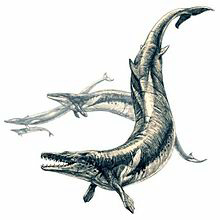
If there had been an Earth Day this week in Louisiana 50 million years ago, it would have been celebrated at the bottom of a pre-historic sea. The first man to discover fossil proof of this sea was Judge Henry Bry, an amateur geologist-paleontologist from Northeast Louisiana. In 1829, he found the fossil remains of a large pre-historic sea mammal embedded in the sides of a steep hill running along a creek near Columbia. The fossil ran along a 400foot long curved line. Paleontologists would decide that Bry had discovered a whale-like mammal of a size and type never seen before. It would be called, “Zeuglodon cetoides”.

April 23, 1811
Today in 1811, the legislature of the Territory of Orleans created four new counties–Beloxy, Feliciana, Pascagoula, and St. Helena. After one year and one week, Beloxy, Pascagoula, and Feliciana would be gone as they would not be part of the State of Louisiana when it entered the union on April 30, 1812. (Beloxy and Pascagoula are the three counties along the Mississippi Gulf Coast, and Feliciane County wold become the southwestern corner of Mississippi. Louisana’s East and West Feliciana would be later be created from East Baton Rouge Parish.

April 23, 1910
A terrible fire destroyed seven blocks in downtown Lake Charles today in 1910. it began in a small trash can behind Blaske’s Soft Drink Stand, or the “Old Opera House Saloon” on North Ryan Street. Firemen were no match for the gusty winds and the highly flammable construction, mainly wooden buildings. The fire spread quickly, engulfing block after block, consuming more than 100 buildings. Among the structural causalities, were the Immaculate Conception Church, City Hall and the Calcasieu Parish Courthouse. A new red and white Spanish Baroque-style City Hall with high arched windows and a campanile would open the following year and serve the city until 1978.

April 24, 1932
A national conference of governors kicked off in Richmond today in 1932. Louisiana was represented by Governor Alvin Olin King, enjoying one of the few perks of his five-month term of office between the ouster of Huey Long in January and the swearing in of Earl long in May. Perhaps more interesting than anything might be doing in Virginia was who was sitting in the Governor’s chair in Baton Rouge while he was out of the state. Alice Lee Grosjean, 27, had been a personal secretary to Huey Long before he appointed her Secretary of State (the first female to hold the position in 1930. As there was no lieutenant governor during the Long interregnum, the Secretary of State was therefore the acting Governor during the three days King was away. Ms. Grosjean left politics (and Louisiana) in 1939, and lived to the age of 89 in Nevada.

April 24, 1877
Francis T. Nicholls was sworn in as Louisiana’s twenty-eighth governor today in 1877. He was born in Donaldsonville in 1834, and attended West Point, graduating in 1855. He lost his left arm commanding the Second Louisiana Brigade at the first Winchester battle on October 15, 1862, and he lost a leg at the second battle of Fredericksburg. During his first administration, he worked to rid the state of carpetbag rule. In his second administration, he was instrumental in defeating the Louisiana Lottery Company. In 1892, he was appointed chief justice of the Louisiana Supreme Court. Nicholls State University was established in Thibodaux and named for him in 1948.

April 25, 2006
Irma Thomas’s After the Rain, an album recorded in the weeks after Hurricane Katrina devastated New Orleans, was released today in 2006. “The Soul Queen of New Orleans” (pictured here at Jazzfest in 1975) had been in show business for fifty years when she lost all of her possessions in Hurricane Katrina in 2005. Because she’d been on the road at the time, she was reported as “missing”. After the Rain won Best Contemporary Blues Album at the 49th Annual Grammy Awards, the first Grammy Award for Thomas, and the second-ever Grammy win by a woman in this category.
April 25, 1831
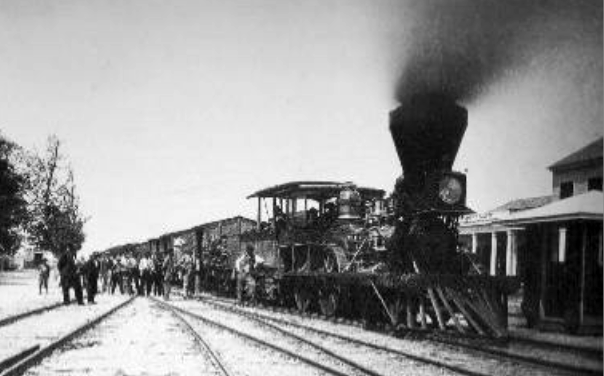
The first railroad in New Orleans began carrying people and goods between the Mississippi River front and Lake Pontchartrain today in 1831. The Pontchartrain Rail-Road was chartered in 1830 and closed more than one hundred years later. The six-mile line connected the Faubourg Marigny neighborhood with the town of Milneburg on the Lakefront. The route of the railway ran down the center of what is now Elysian Fields Avenue. It was the third common carrier railroad to officially open for service to the public in the United States, following the Baltimore and Ohio and the South Carolina Canal and Rail Road Company.

April 26, 1970
Today in 1970, a bomb consisting of “twenty to 30 [sic] sticks of dynamite” was detonated in the Senate Chamber. The force of the blast peeled marble slabs off the 30-foot high walls, caved in the ceiling, blasted a hole in the marble floor, shattered all the windows in the chamber and splintered lawmakers’ desks. Damage was estimated at a half million dollars. The bomb was an apparent retaliation for the shootings of three African Americans by the police; a second bomb exploded at a Baton Rouge country club. To this day, a splinter of wood from a desk in the chamber remains embedded in the ceiling from the force of the explosion.
April 26, 1988
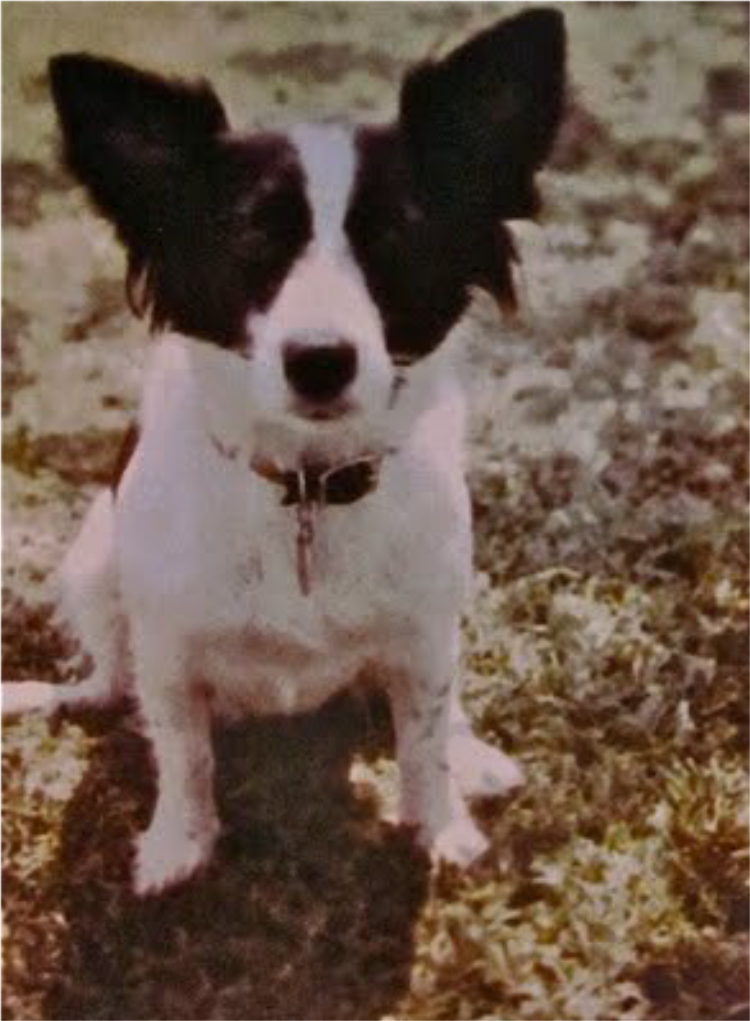
This week in 1988, an artist’s exhibition at the Upstairs Gallery in Beverly Hills, California, launched a world-wide sensation. Cajun artist George Rodrigue had been acclaimed as a Louisiana painter for the better part of a decade, and in preparation for the 1984 World’s Fair in New Orleans, he painted a painted a series of Louisiana images. One of those images, a loup garou, looked suspiciously like his own terrier-mix, Tiffany. The painting was not immediately beloved and was still unsold four years later when it was shipped to California for the Beverly Hills exhibit. California critics would be enchanted and begin referring to it as the “Blue Dog.”

April 27, 1906
Cléoma Falcon was born in Crowley today in 1906. She was a guitarist and vocalist who, along with her husband Joe Falcon, recorded Allons à Lafayette, considered the first Cajun music record, which was released in 1928. Her work opened the way for other Cajun music artists. Aside from being a ground-breaking recording artist, Cléoma Breaux also was one of the few women to perform live, despite the social standards of the era. She was the first woman inducted into the Cajun Music Hall of Fame.
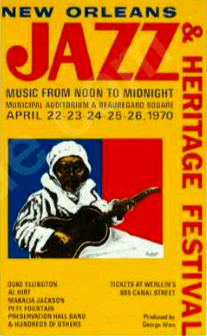
April 27, 1970
The first New Orleans Jazz and Heritage Festival, better known as Jazzfest, opened this week in 1970. The New Orleans Jazz & Heritage Foundation, a nonprofit organization, was established to oversee the Festival and hired George Wein, the father of the Newport Jazz Festival to design and produce a unique festival for New Orleans. Wein’s concept of the Louisiana Heritage Fair was a large daytime fair with multiple stages featuring a wide variety of indigenous music styles, food booths of Louisiana cuisine, and arts and crafts booths, along with an evening concert series. Mahalia Jackson, Duke Ellington, Pete Fountain, Al Hirt, Fats Domino and others would perform at the first festival.

April 28, 1894
The second St. Charles Hotel on St. Charles Avenue in the Central Business District burned to the ground today in 1894. The first iteration of the hotel had been built in1837 and was destroyed by fire on January 18, 1851. The second hotel opened in January 1853, and became a highly successful venture. With accommodations for 1000 guests, it was enormous. One British visitor of 1858 noted, “This hotel is a monster.” But despite improvements over the years, it too would burn. A third hotel at the site opened in 1896 and would survive until was demolished in 1974 to make room for the 50-story office tower now known as Place St. Charles.

April 28, 1960
Tens of thousands cheered Charles DeGaulle when he visited New Orleans today in 1960. New Orleans had been the last stop of the French President’s official visit to the United States, and after a triumphal entry parade, DeGaulle spoke at Jackson Square, saying (in English), “I am aware not only of the historical links between this city and France, but also of the present and future for us together.” He concluded his remarks with, “Long live New Orleans! Long live the United States! Long live France!” On the following day, there would be another parade and a ceremony commemorating the Louisiana Purchase in Jackson Square.
April 29, 2020
How long is a lightning bolt? Most are about 2-3 miles long, and it’s rare that one would be longer than ten miles. But today in 2020, a massive “megabolt” arose 75 miles southwest of Houston, traveled along the I-10 corridor through Texas, Louisiana, and Mississippi, and finally died out–eight seconds later, 25 miles north of Biloxi. In 2022, the National Oceanic and Atmospheric Administration (NOAA) stripped the megabolt of its title after it reviewed data from a 2017 strike that traveled 515 miles from Texas to near Kansas City and determined that it was 38 miles longer than originally measured. Needless to say, we in Louisiana and Mississippi should demand a similar recount!
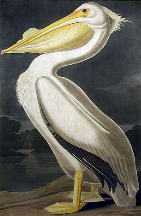
April 29, 1785
John James Audubon was born in Haiti this week in 1785. In 1803, he settled on father’s estate “Mill Grove” near Philadelphia and began studying and drawing birds. After failing in other businesses, he decided to attempt to publish a collection of paintings of American birds. Audubon and his wife moved to St. Francisville and 1825, where he taught music and drawing. Birds of America, his four-volume work was published between 1827 and 1838 and received favorable reception by
European publishers, after meeting a cool reception from American publishers and critics. In 1841, he moved to New York and settled on the estate “Minnie’s Land”, now Audubon Park.
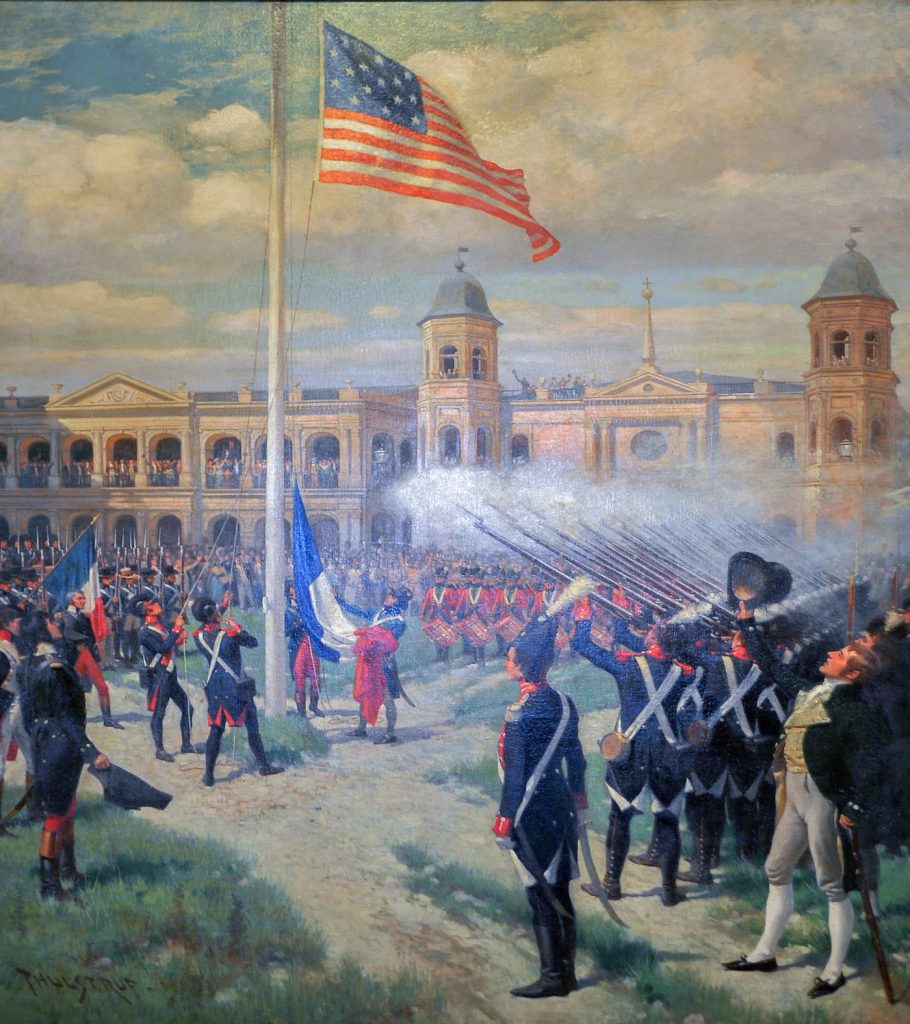
April 30, 1803
Today in 1803, nine years to the day before Louisiana became a state, the United States and France completed one of the largest land deals in history in Paris. The United States acquired 828,000 square miles of land for $15 million–that’s about four cents an acre. The deal, orchestrated by Robert Livingston and James Monroe, doubled the size of the U.S. and facilitated rapid westward expansion. It included territory stretching from the Mississippi River to the Rocky Mountains and makes up all or parts of 15 present-day U.S. states and two Canadian provinces. The formal transfer of ownership in what is now Jackson Square in the famous painting did not occur until December 1803.

April 30, 1812
Happy Birthday, Louisiana! On the ninth anniversary of the agreement was reached on purchase of Louisiana from France, Louisiana was admitted to the Union as the 18th state today in 1812. The State of Louisiana would be something new for the United States. It was the first state west of the Mississippi River to seek statehood; it would be admitted to the United States with no fixed borders as the Adams-Ona Treaty establishing the Sabine River as the western edge of the state was still seven years away; it would have political traditions were not outgrowths of British colonial experience, but of the monarchies of France and Spain.