
July 16, 1994
Arrr! The Shreveport Pirates of the Canadian Football League were defeated by the Toronto Argonauts, 35-34, in the first CFL game at Independence Stadium. Earlier that year, the CFL had decided to expand into the US, establishing teams in Memphis and Birmingham, in addition to Sheveport. While the Pirates were a rather miserable football operation on the field, going 8-28 over their two seasons, fans in Shreveport embraced the Pirates and their rather bold colors of purple, orange, silver and black. The club averaged 17,871 fans per game, second-highest of the American teams, behind only Baltimore. At the conclusion of the 1995 season, the league shut down its US experiment, shutting down all of the US teams.

July 16, 1930
Louisiana’s fifty-third governor, Murphy J. “Mike” Foster, Jr., grandson of 31st governor Murphy Foster, was born this week in Franklin. After serving two terms in the state senate, he was elected governor in in 1995, defeating Cleo Fields, Mary Landrieu and Buddy Roemer. His inauguration ceremony on January 8, 1996, would take place at the Old State Capitol in Baton Rouge, just as his grandfather’s had been a century earlier. During his administration, Foster would oversee the development of a comprehensive plan for preserving the Atchafalaya Basin and consolidate state offices at Capitol Park in downtown Baton Rouge, sparking the downtown area’s dynamic regeneration.

July 17, 2009
This week in 2009, the Internal Revenue Service filed documents in New Orleans in connection with a federal tax lien against property owned by Nicholas Cage in Louisiana, concerning unpaid federal taxes. This led to other suits by and against Cage which took months to resolve. But in 2010, he used some of the money to purchase some valuable New Orleans real estate–namely at gravesite at the city’s St. Louis Cemetery No. 1 on Basin Street, home to other New Orleans luminaries like Marie Laveau. The empty grave is a nine-foot-tall stone pyramid (pictured). There is no name on it yet, but it bears the expression, “Omnia Ab Uno,” or “Everything From One.”

July 17, 1964
Today in 1964, the NAACP and the Council on Racial Equality (CORE) promised demonstrations, pickets and lawsuits against the state and the City of Baton Rouge if their list of ten demands of state and city government were not met within one week. State demands included: hiring African Americans at the capitol “above the broom and mop level; desegregating the Capitol barber shop (seen here in the early 1930’s); appointing blacks to 22 state boards and commissions; convening a meeting of large employers in the state to discuss the implementation of Title 7 of the 1964 Civil Rights Act that dealt with large employers; and investigating “poverty mockery” of community action groups in the state.

July 18, 1930
This week in 1930, Lieutenant Governor Paul Cyr (pictured) complained that Governor Huey Long vetoed three bills enacted at the recently completed legislative session just to spite him. Long had vetoed a bill appropriating $500 for salary to the lieutenant governor while the governor was out of the state, stating that it was unnecessary as he had no plans to leave the state. Cyr retorted that perhaps Long shouldn’t want to leave the state. “I would like to get hold of the state machinery for about forty-four minutes. I am quite sure I could do more the people in that short time than he had done in the past two years.”

July 18, 1543
Today in 1543, the survivors of Hernando De Soto’s expedition finally reached the mouth of the Mississippi River, where they would construct crude ships to sail for Mexico. DeSoto had died on May 21, 1542, near the site of Ferriday, and Luis de Moscoso Alvarado would be tasked in guiding the remnants of the expedition to the Gulf. The first part of the journey had been a nightmare of Indian harassment and foundering boats and rafts. One fortuitous legacy of DeSoto’s adventure would be the fierce Spanish hunting dogs that would be left behind the expedition to become the ancestors of Louisiana’s beloved State Dog, the Catahoula Cur.

July 19, 1885
Can you get a Whopper and fries at the BK House and Gardens in New Orleans? Probably not, but you could probably rent what was once known as the Beauregard House on Chartres Street and enjoy your burger in the garden. Novelist Frances Parkinson Keyes was born this week in 1885 in Charlottesville, Virginia. She enters Louisiana’s story in the early 1950’s when she purchased the elegant old house in the French Quarter (pictured) that had been built in 1826 by the grandfather of chess master Paul Morphey. Former General Beauregard had moved into the mansion in 1865 and lived there with his son for three years. As Keyes’ fame grew and Beauregard’s faded over the years, the house became known as the Beauregard-Keyes House. Today, with both Beauregard’s military and governmental service and Keyes’ literary works about life on the old plantation in disrepute, “BK House and Gardens” is celebrating its bicentennial in 2026.

July 19, 1925
Today in 1925, in the waning days before numbered federal highways, officials announced plans to complete the Old Spanish Trail, a system of free highways, bridges and ferries between Florida and California. Governor Fuqua announced that negotiations were underway for a bridge over the Sabine River between Louisiana and Texas. The last part of the trail would be the bridges over the Rigolets, the channel between Lake Pontchartrain and Chandeleur Sound between New Orleans and the Mississippi state line. The federal highway system that would also be established in 1925 would eventually incorporate the trail into its system, and the portion of the trail in Louisiana would become US 90.

July 20, 1972
City of New Orleans, written by Steve Goodman and performed by Arlo Gusthrie and considered by some to be the greatest train songs of all time was released today in 1972. At the Quiet Knight bar in Chicago, Goodman saw Guthrie and asked if he could play a song for him. Guthrie said that if Goodman bought him a beer, he’d listen for as long as it took to drink the beer. Apparently, it took him at least three minutes and fifty-two seconds to drink the beer as the song would hit No. 18 on the
Billboard Hot 100 chart and become the biggest hit of Guthrie’s career.

July 20, 1968
Governor John McKeithen signed legislation today in 1968 to create the Council for the Developmentof French in Louis iana (CODOFIL). Bureaucrats and schoolteachers had long sought to stamp out the French language in the name of Americanization. Cajuns and others who spoke the language were told it was shameful and a sign of ignorance. Students were punished for speaking the language after the state board of education decided in 1915 to suppress French, a move strengthened six years later when the Louisiana Constitution forbade the use of any language other than English in the public-school system. In 1968, there were a million French speakers in Louisiana. That number today is 200,000.

July 21, 1921
The 8000 seat Coliseum Arena opened in Uptown New Orleans today in 1921. In early 1921, John Dillon, Frankie Edwards and Al Buja formed a boxing syndicate to develop an arena modeled after the Milwaukee Auditorium and Madison Square Garden with unobstructed views. The total The first event at the $100,000 venue was a boxing match between local fighter Martin Burke and Charlie Weinert, but over the years fights featuring Jack Dempsey, Gene Tunney, Joe Brown, Joe Louis, and Sugar Ray Robinson were staged. The Coliseum also hosted college and high school sports events, music performances and public lectures. Dr. Martin Luther King Jr. spoke at the arena in 1957. The final boxing match at the arena was held on December 14, 1959. It still stands at the corner of North Roman and Conti Streets.

July 21, 2011
Today in 2011, former Govenor Charles R. “Buddy” Roemer announced his candidacy for the Republican nomination for President of the United States at Dartmouth College in Hanover, New Hampshire. Roemer had served as Louisiana’s 52nd governor, and stated that his campaign would stress campaign finance reform. He was not invited to any of the Republican debates and was perhaps ahead of his time when he tweeted responses to debates in which he could not participate. Meeting little success, he announced later in 2011 that he would seek the nomination of “Americans Elect”. In early 2012, he stated that he would seek the nomination of the Reform Party.

July 22, 1959
Alligator People, a movie starring Lon Chaney, Jr., Beverly Garland and some other people who should have known better, premiered today in 1959. While the film was set in the fictional town of Bayou Landing, Louisiana, it was not filmed here, the state dodged a bullet as no one in Louisiana was known to have had anything to do with it. Garland, who also served as the film’s narrator, noted that Jane Marvin was one of her favorite roles, although she noted, “The hardest thing in that movie was simply to keep a straight face”. But you’ve got to admit that the publicity photos were wonderful.

July 22, 1912
Today in 1912, U. S. Congressman Albert Estopinal, Sr., announced that the navy would station four submarines at the Algiers Navy Yard to guard the mouth of the Mississippi River. The naval facility at Algiers was built on land that had been granted to Bienville, founder of New Orleans, in719. The government purchased it in 1849 as the site for a proposed navy yard that would not be built until 1901, when the dry dock arrived at the yard and the US Naval Station was formally established. Over time, the base would become the largest military base in the New Orleans area. It closed permanently in September 2011.

July 23, 1746
St. Bernard Parish was not named for the legendary St. Bernard or Clairvaux, who’d been one of the founders of the Knights Templar in the Twelth Century. It wasn’t even named for an enormous and adorable brandy-bearing dog. It was named for Bernardo Vicente de Gálvez y Madrid, the First Count of Gálvez, born today in 1746 in Macharaviaya, a mountain village in the province of Málaga, Spain. His exploits as the Spanish governor of Louisiana from 1777 to 1783 are too many to be recounted here, but suffice to say he was one of the most influential figures in the history of Louisiana and the entire Gulf Coast region. In addition to St. Bernard Parish, named for him in 1807, and still today, he is remembered at annual observances in Pensacola and Galveston.

July 23, 1900
An altercation involving Robert Charles, his roommate, and several New Orleans police officers today in 1900 sparked three days of rioting that would be called the Robert Charles Riot. After Charles, an African American laborer, fatally shot a white New Orleans police officer and escaped arrest, a large manhunt ensued. A white mob rioted, attacking blacks throughout the city. Twenty-eight people were killed in the riots, including Charles, shot by a special police volunteer. Other white men in the mob shot hundreds of bullets into his body and beat him beyond recognition. More than fifty people, mostly African Americans, were wounded, included eleven who needed to be hospitalized.

July 24, 1993
Nobody could say when he was born, but legendary trombonist Leon “Pee Wee” Whittaker passed away this week in 1993. He was born in Newellton sometime around 1906. As a teenager, he joined the Rabbit’s Foot Minstrels, touring the Delta alongside legends like Louis Armstrong. From 1955 to 1963, Pee Wee received the opportunity to play with Doc Morris and his band associated with a small circus out of Michigan, traveling all over Canada and England. After a lifetime of touring, Pee Wee grew tired of the road and went home to Ferriday. He retired around 1963 and was inducted into the Hall of Master Folk Artists in 1982. Along with Jerry Lee Lewis, Jimmy Swaggart, and Mickey Gilley, he was among the initial inductees into the Delta Music Museum and Hall of Fame in Ferriday in 2002.

July 24, 1969
Gators got your granny (Chomp! Chomp!) this week in 1969 when Poke Salad Annie by Oak Grove native Tony Joe White peaked at Number 8 on the Billboard Hot 100 countdown. White was also born this week in 1943, one of seven children and raised on a cotton farm. When he was sixteen, his oldest brother brought home a Lightnin’ Hopkins album and started teaching blues guitar to his younger brothers. Tony Joe was also influenced by local bluesmen, country singers and Cajun music, melding it all into a concoction called Swamp Pop. White also wrote hits like Rainy Night in Georgia for more than sixty other artists.

July 25, 2026
Even as we speak, thousands of Louisianians are walking around in one of our state’s larger muncipal areas who don’t even know that the place exists. When “Terre Bonne” Parish was established in 1822, the parish’s largest community was Bayou Cane, where the parish’s first dirt-floor courthouse was built. Bayou Cane was approximately three miles from the present corporate limits of Houma. Today, the 22,143 residents of the Bayou Cane “Census Designated Area” occupy a 7.6 square mile rectangle bounded by the St. Louis Canal Road, Coteau Road, St. Charles Street and Bayou Cane itself. Two of the more significant sites in the Bayou Cane CDA are Southdown’s Plantation (photo), built in 1858 and expanded in 1893, and the site of Ciro’s Grocery Store, which opened in 1960 and became the first Rouses.

July 25, 1843
Abbeville was first called La Chapelle, and the land it stands on was purchased by founding father Père Antoine Désiré Mégret, a Capuchin missionary, today in 1843 for $900. Father Megret named the town after his home in France, Abbéville. There were two people living on the land at that time, Joseph LeBlanc and his wife Isabelle Broussard, whose former home Father Megret had converted into the first Catholic church. Father Megret modeled his original plan for the village after a French Provincial village. The original church, first named in honor of St. Ann, burned in 1854. St. Mary Magdalen Catholic Church now stands at the same location.

July 26, 1876
At the Philadelphia Centennial Exhibition this week in 1876, an African-American gardener from Louisiana named Antoine demonstrated a new breed of pecan he’d propagated by grafting a superior wild pecan to seedling pecan stocks.Very little is known about Antoine, other than the fact that he was an enslaved gardener at Oak Alley Plantation. His mother Zaire was born in slavery, but his father Zephyr had been kidnapped from the African Congo and enslaved. Antoine’s clone was named “Centennial” and won the Best Pecan Exhibited award at the exposition. His 1876 planting, which eventually became 126 Centennial tree, was the first official planting of improved pecans. Pecans are the only nut native to North America. The successful use of grafting techniques was slow and had little commercial impact—until the 1880’s when Louisiana and Texas nurserymen began propagation on a commercial level, giving rise to the pecan growing and shelling industry.

July 26, 1943
Today in 1943, the State of Louisiana leased mineral rights at the Rockefeller Wildlife Refuge in Cameron and Vermilion Parishes during World War II. The Rockefeller family had donated the 86,000-acre site in 1920, with restrictions on mineral production, but war had convinced them to amend the terms of the gift. In July 1943, the State Mineral Board auctioned some Cameron Parish rights for $558,000 to the Magnolia Oil Company and Humble Oil Company. Governor Sam Houston Jones said that profits from the sale would be used to expand facilities for birds and game at the refuge and that the “surplus” would fund a salary increases for state schoolteachers.

July 27, 1966
The Brown Pelican (pelecanus occidentalis ) became the State Bird of Louisiana today in 1966. In the 60s, Brown Pelicans that had defied 40 million years of evolution were in serious trouble in Louisiana.By 1961, pelicans no longer nested in the state and had become a rare sight in places where they used to be abundant.To show support for the Brown Pelican, in 1966, legislature showed support for the birds by naming them the official state bird. At the same time, birds from Florida were reintroduced to the Louisiana coast. Shortly after, DDT was banned and since then, “briefs”, “squads”, “pods”, and “pouches” of Brown Pelicans have once again become a common sight in the state.

July 27, 1963
Garbage was on the move in Baton Rouge today in 1963. Work on the I-10 through the city had necessitated the removal of a 50,000-square yard garbage dump between Acadian Thruway and College Drive. In response to questions from residents, Thomas Sellers, superintendent for the construction company, said that the “whole problem” had been exaggerated. “It wouldn’t turn your stomach on the site. And when it’s on the trucks and the trucks are covered, it will be no worse than a garbage truck passing.” The dump would be moved to a site adjacent to Lee High School, which had been chosen over “Devil’s Swamp” in North Baton Rouge.

July 28, 1936
Happy birthday to the Louisiana State Police! In 1922, the Louisiana Highway Commission had been created and given the power to appoint inspectors to enforce laws relating to the highways. The Commission operated with the state divided into ten districts; sixteen officers patrolled the entire state. After the Great Flood of 1927, the Bureau of Criminal Investigation, was established to deal with criminal activity not related to traffic law, and on July 28, 1936, the two divisions of law enforcement were combined to form a modern, well-equipped, and well-trained force known as the Louisiana Department of State Police. Over the years since, the organization has seen the size and scope of its operation increase several times over. With the motto of “Courtesy, Loyalty, Service,” the State Police is now composed of 1200 authorized officers and 580 civilian employees.

July 28, 1978
Today in 1978, Shreveport’s Confederate Memorial Medical Center (CMMC) was renamed as the Louisiana State University Hospital in Shreveport The 1976 merger of CMMC and the LSU School of Medicine in Shreveport had resulted in the medical school being the first in the state to have its own teaching hospital, and the name change was made to better reflect this mission. Six years earlier, State Representative Alphonse Jackson, Jr., had questioned the appropriateness of the hospital’s name in 1972, stating that ’Confederate’ might not be the best name for a hospital whose patient population was 90 percent African American. Other names suggested were Northwest Louisiana Medical Complex and University Hospital.

July 29, 2026
Any attempt to provide a definitive history of jambalaya is bound to come to grief. We’ll just say that it was a combination of African, French, and Spanish influences and let it go at that. What we can say is that the first appearance in print of any variant of the word ‘jambalaya’ in any language occurred in Leis amours de Vanus; vo, Lou paysan oou théâtré, by Fortuné (Fortunat) Chailan, first published in Provençal dialect in France in 1837. Jambalaya did not appear in a cookbook until 1878,when the Gulf City Cook Book by the ladies of the St. Francis Street Methodist Episcopal Church in (ahem) South Mobile, Alabama, contained a recipe for “Jam Bolaya”.

July 29, 1948
The Julius Rosenwald Fund was dissolved this week in 1948 after twenty-five years of helping to fund more than 5300 schools, homes and shops for African Americans in the South. “Rosenwald schools” were built across the South beginning in 1912 with support from the Rosenwald Fund which was officially established in 1917. Julius Rosenwald was a multimillionaire merchant and one of the founders of Sears, Roebuck, and Company. Rosenwald was a friend of Booker T. Washington, who had inspired him to take an interest in education for African Americans. The first of more than four hundred Rosenwald schools in Louisiana (like this one in DeSoto Parish) would be completed in 1916.

July 30, 2026
Unlike dishes like gumbo and jambalaya which probably evolved in different forms on varios continents over centuries, we think we know wher crawfish etoufee came from–Breaux Bridge! The first establishment to serve it commercially was the Hebert Hotel in Breaux Bridge in the 1920’s by the owner, Mrs. Charles Hebert, and her two daughters, Yolie and Marie. The Hebert sisters gave Mrs. Aline Guidry Champagne of Breaux Bridge, who gave it the name ‘étouffée’ (which means ‘to smother.’) Later, Aline and her husband, Harris, opened the Rendezvous Restaurant in Henderson in 1947 and began serving crawfish dishes that have become legendary. As it happens, Henry had a brother, Mulate, who also had a restaurant that bore his name in Henderson, which he later moved to Breaux Bridge.

July 30, 1984
Today in 1984, at 12:36 in the afternoon, the tank vessel Alvenus (pictured) broke apart off of Cameron Parish and spilled 2.8 million gallons of oil into the Gulf. The Alvenus grounded with catastrophic structural failure in the Calcasieu River Bar Channel about eleven miles south-southeast of Cameron, creating the largest oil spill from a ship ever encountered in the Gulf of Mexico. Attempts to contain and recover the oil at sea were rendered ineffective by rough seas and the magnitude of the spill. A well-defined 75-mile slick of oil traveled over 100 miles west, arriving on Texas beaches on August 3rd and 4th.

July 31, 2008
Uncle Josh’s Punkin Centre Stories was published as an ebook today in 2008. Ordinarily, this would not interest your typical Louisianian, as neither Punkin’ Centre, Vermont, resident Uncle Josh nor his creator, comedian Cal Stewart, a popular radio comedian in the 1920s , ever set foot in Louisiana to anyone’s knowledge. But between them, they did leave an impression as their hometown leant its name to the Tangipahoa community of Pumpkin Center. The village had no name at that time and some of the young men formed a baseball team to compete with teams from Hammond, Springfield and Albany. The team members named themselves the “Pumpkin Center” baseball team in honor of Uncle Josh and his radio show. Over time the residents of surrounding cities and villages began referring to the area as Pumpkin Center and the name stuck.
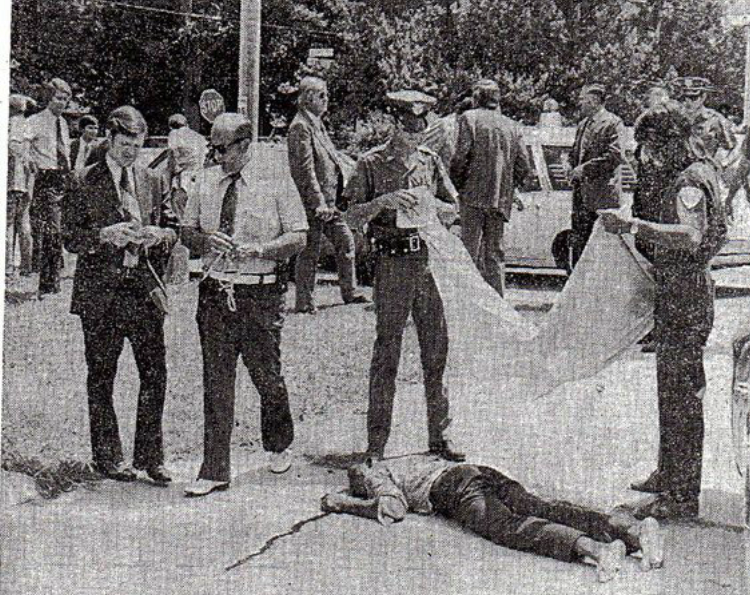
July 31 1969
Governor John McKeithen declared a state of emergency and called out 250 State Police and 700 National Guardsmen to patrol the streets of Baton Rouge today in in 1969. On July 26th, a Baton Rouge policeman had shot and killed 17-year-old African American James Olinney, Jr., the second fatal shooting of a black teenager by police in a week. Earlier on the 31st, the NAACP had led a peaceful march from the site of the shooting in South Baton Rouge to the Municipal Building. No incidents were recorded at the march, but in the aftermath, white-owned businesses, including Snyder’s Department Store on East Boulevard and Ferrara’s Grocery on South 16th Street.